Connect to Google BigQuery data source
Bold Reports® connects to a Google BigQuery data source through a Google Cloud service account. You use a service account key file to securely access and query data from your Google BigQuery projects. Follow the steps below to create a service account and set up the connection.
Create a service account
To connect Bold Reports® to Google BigQuery, first create a service account in the Google Cloud console.
-
Go to the Create Service Account page in the Google Cloud console:
https://console.cloud.google.com/projectselector2/iam-admin/serviceaccounts -
Select your project from the dropdown menu or create a new project.

-
Click
Create Service Account.
-
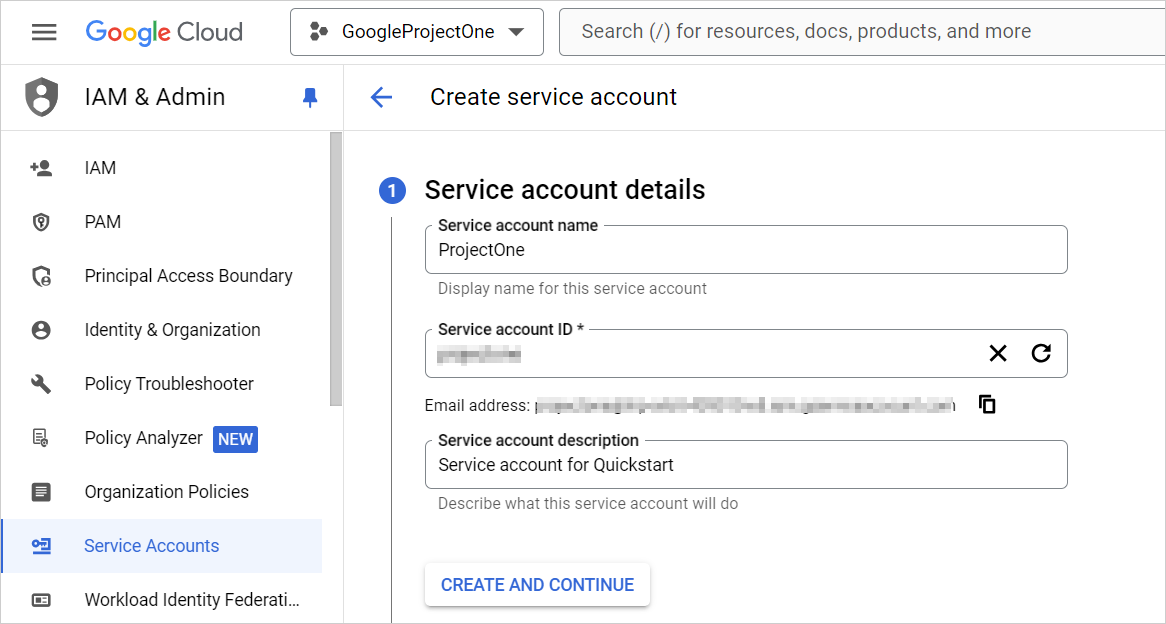
In the Service account name field, enter a name. The Google Cloud console automatically populates the Service account ID field based on this name. Enter a description for the Service account, for example: Service account for Quickstart. Then, click the Create and Continue button.
-
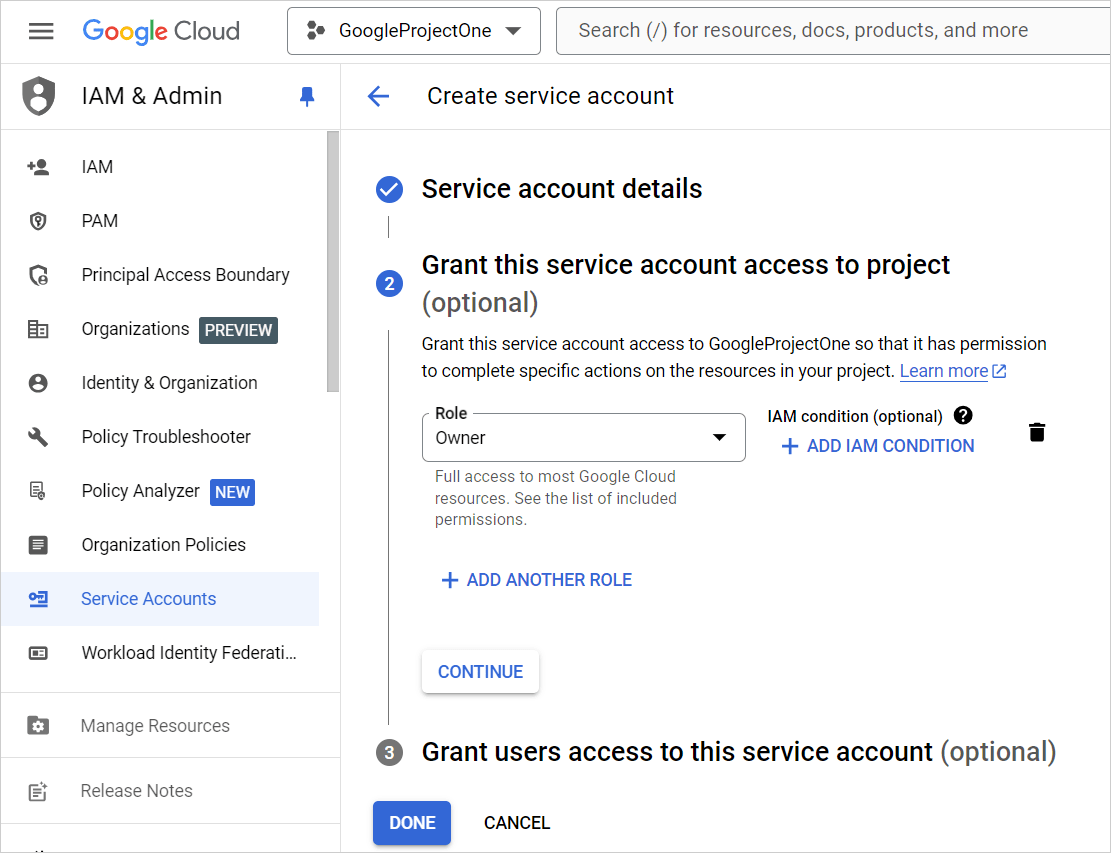
To provide access to your project, grant the following role(s) to your service account: Project > Owner. Select a role, then click Continue.
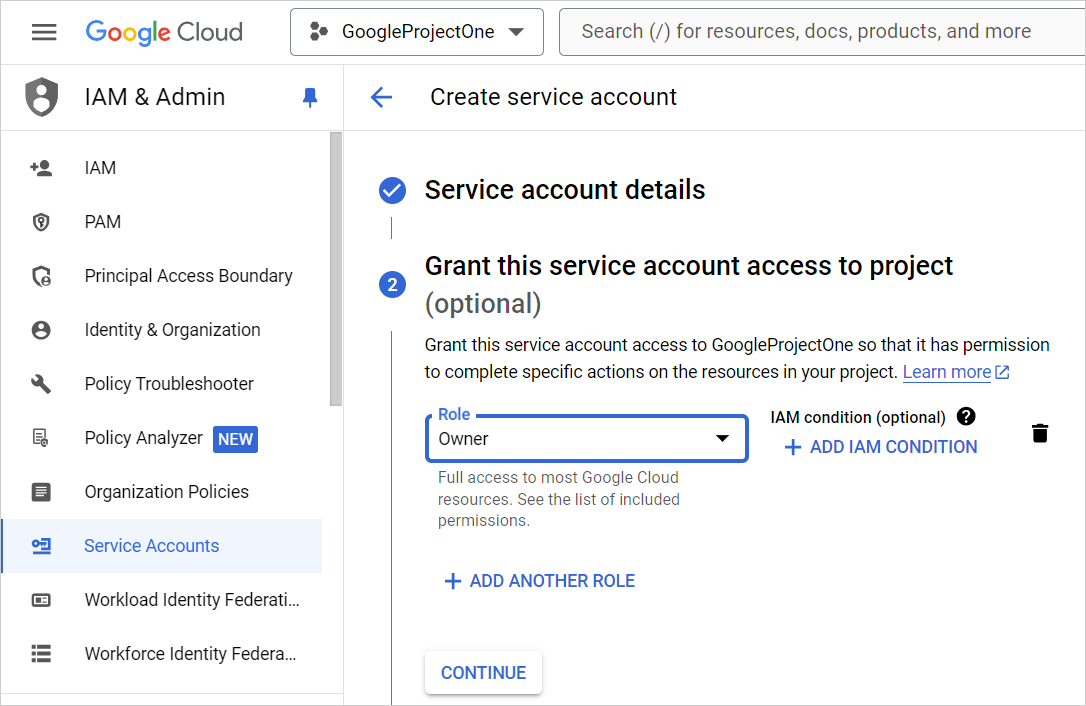
To add more roles, click Add Another Role and select additional roles individually.
NOTE: The role you assign determines which resources the service account can access in your project. You can revoke or grant additional roles later. In production environments, avoid assigning the Owner, Editor, or Viewer roles. Instead, assign a predefined or custom role based on your needs.
-
Click Done to finish creating the service account. Keep the browser window open, because you need it for the next step.
How do I create a service account key?
Bold Reports® uses a JSON service account key to connect to Google BigQuery. Create the key in the Google Cloud Console.
-
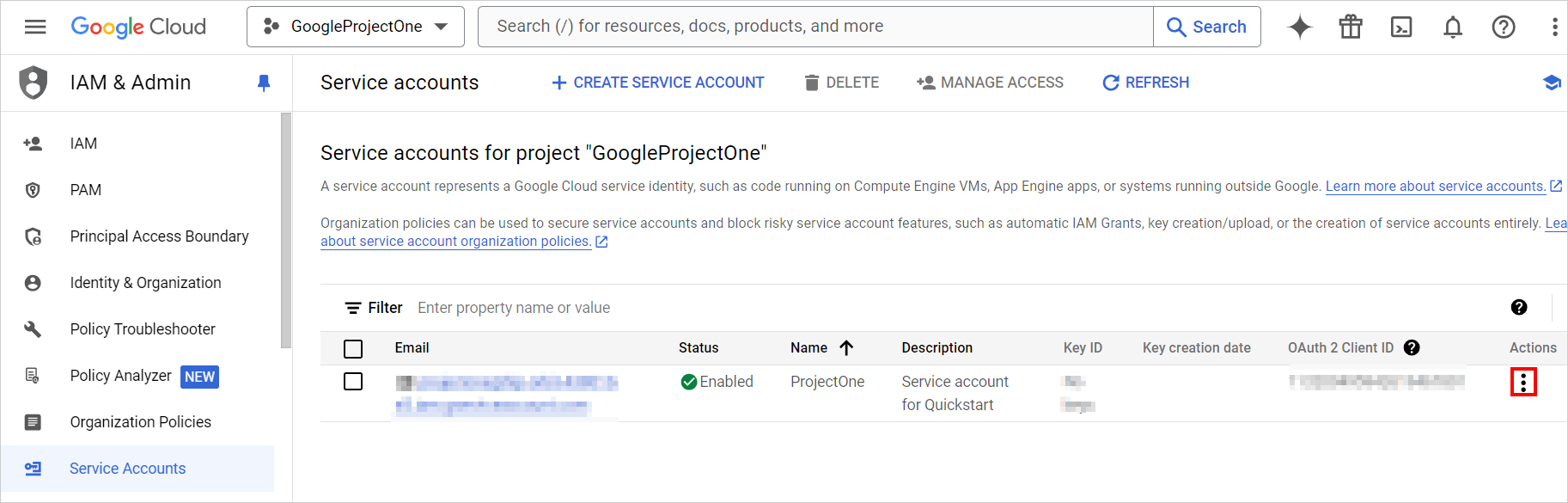
The Google Cloud Console displays the created service account. Click the highlighted icon shown in the following image.
-
Select
Manage Keysfrom theActionscontext menu.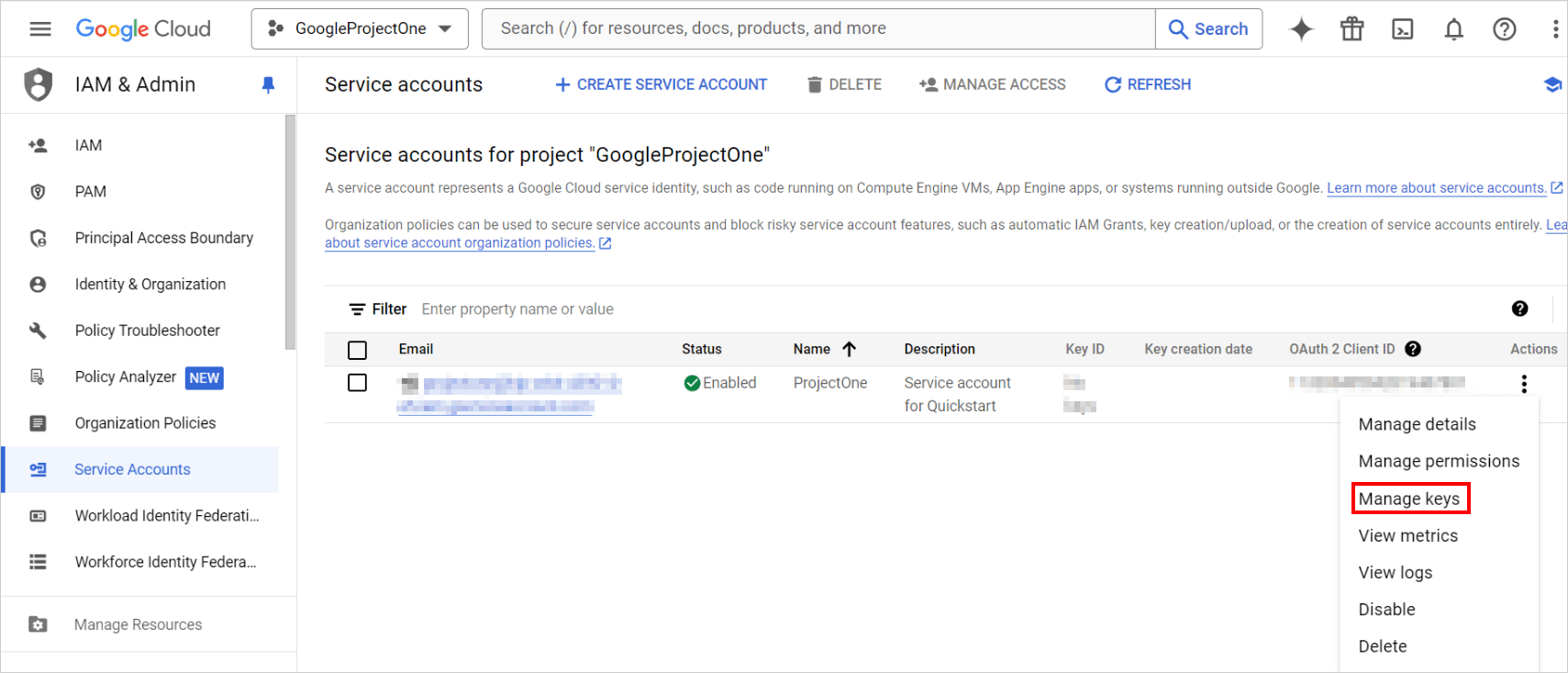
-
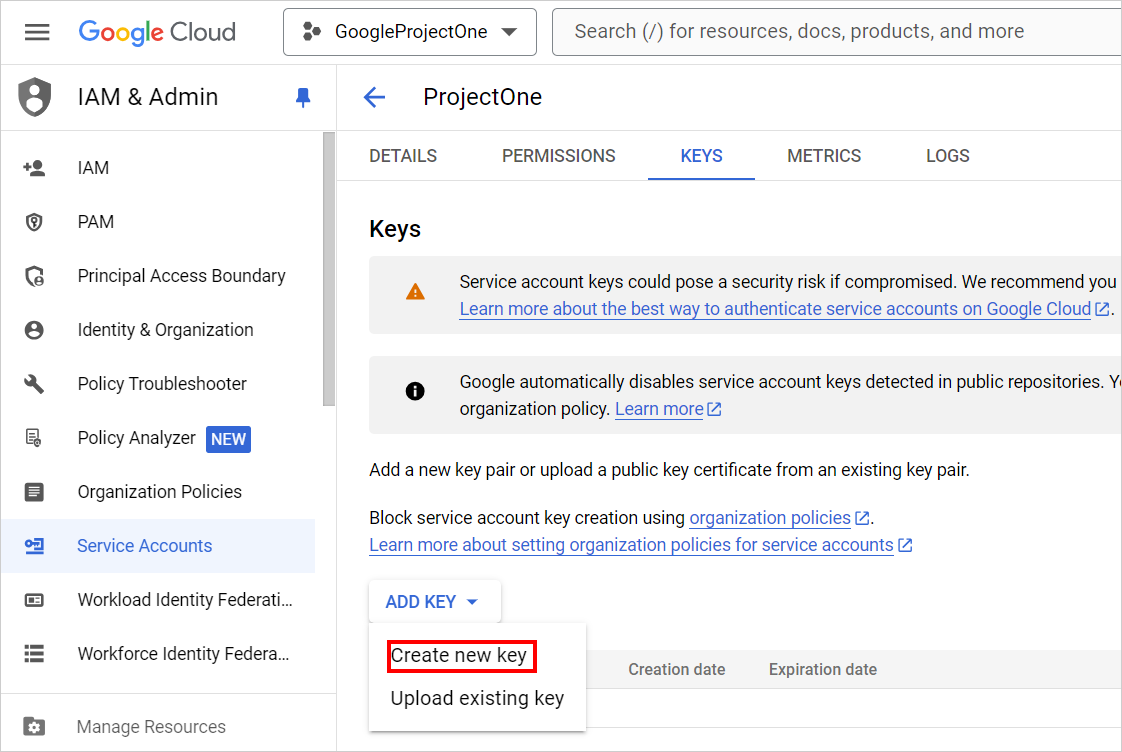
Click Add key, and then click Create new key.
-
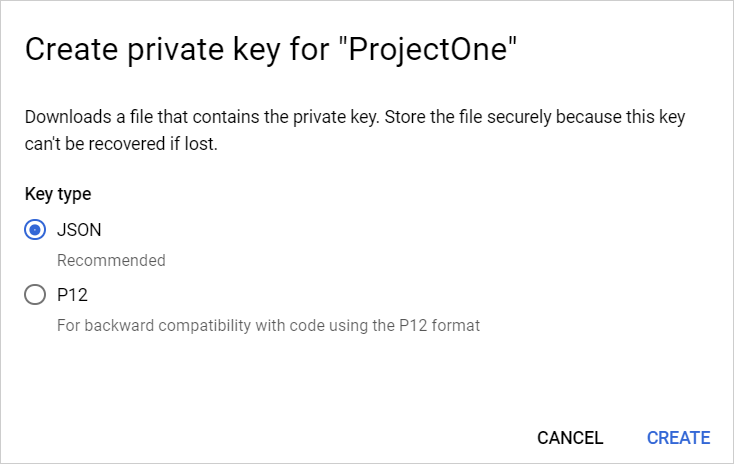
Click Create. A JSON key file downloads to your computer.
How do I create a Google BigQuery data source?
To create a Google BigQuery data source in the Bold Reports® Web Report Designer, open the Data configuration panel and choose the Google BigQuery connection type.
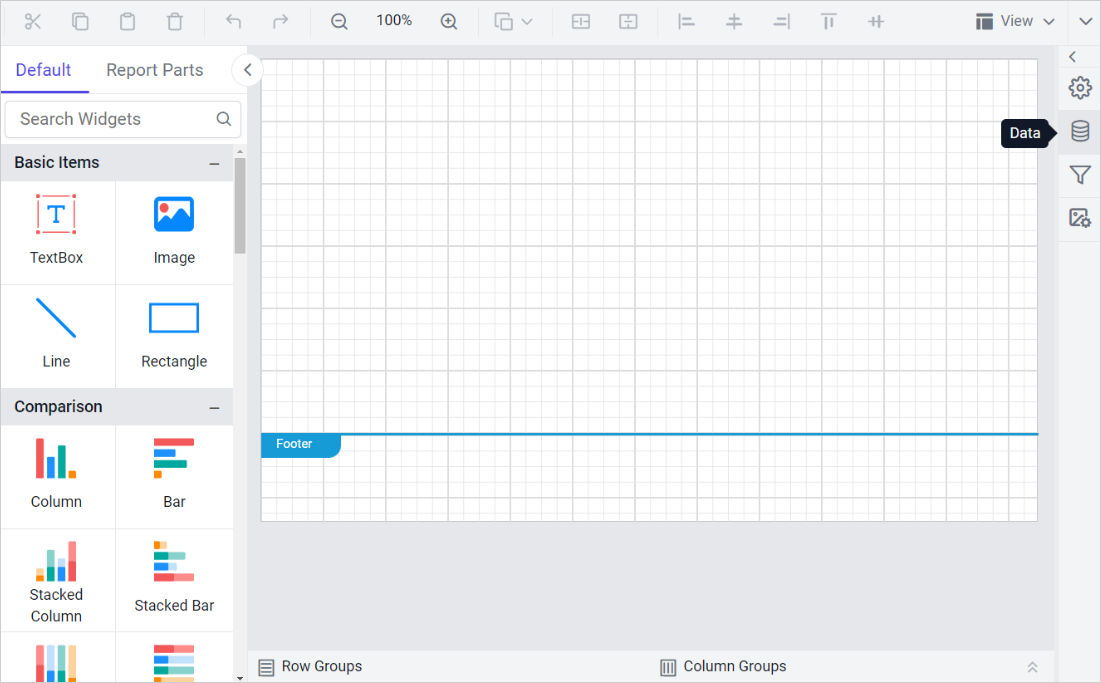
- Click the Data icon in the configuration panel.
- In the
DATAconfiguration panel, click theNEW DATAbutton.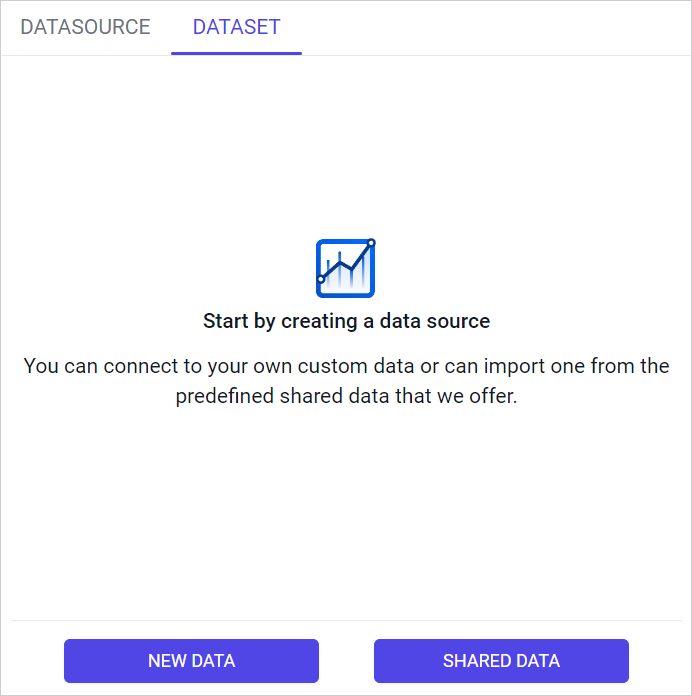
- In the connection type panel, choose the
Google BigQuerydata source type.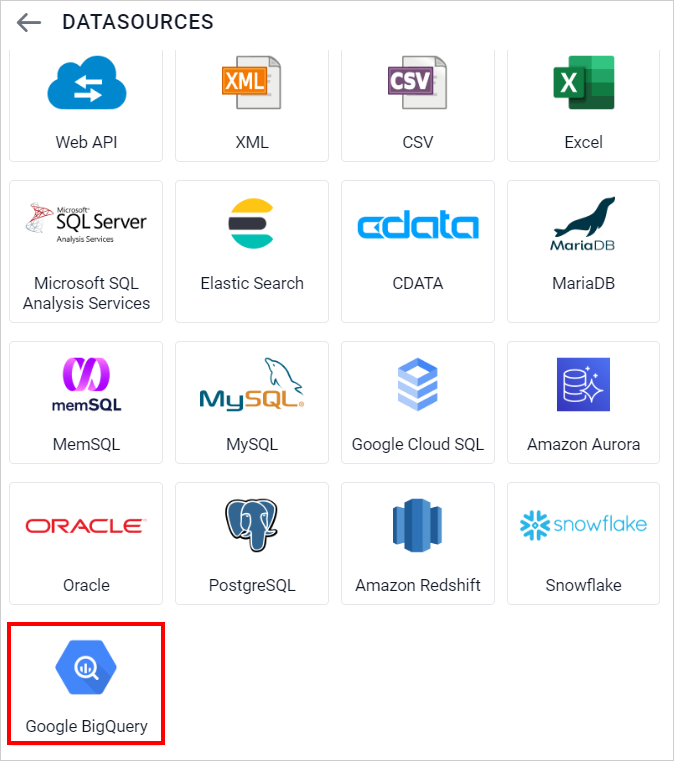
- In the Name field, specify the data source name without special characters.
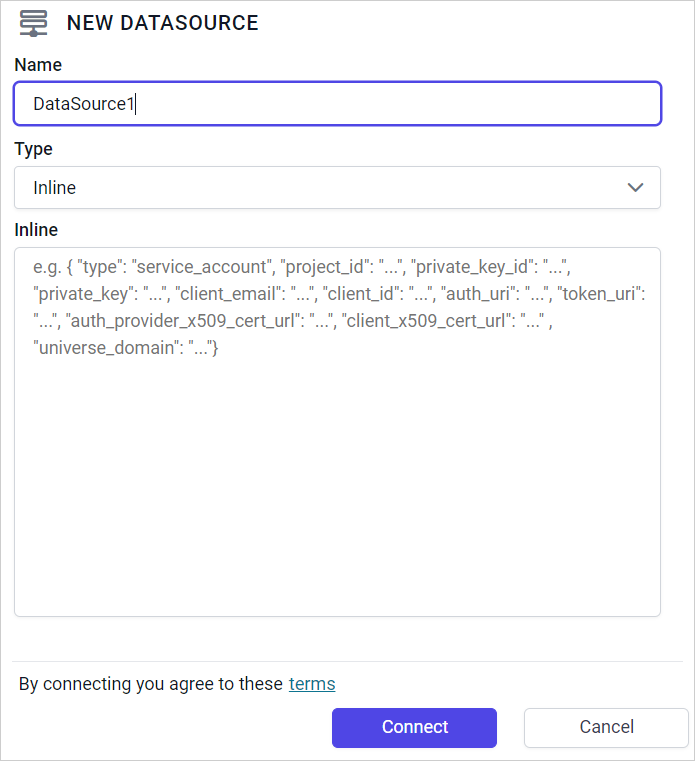
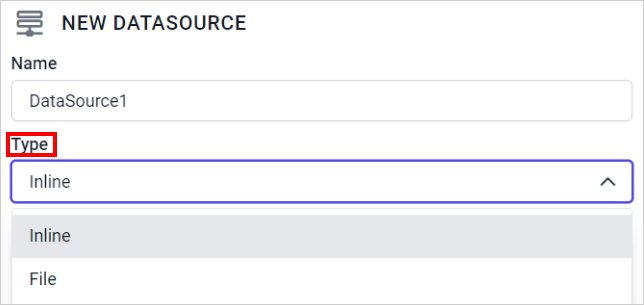
- Provide the service account JSON data in one of two ways: in inline mode or by uploading the JSON key file.
How do I provide the service account JSON inline?
To provide the Google BigQuery service account JSON inline in the Bold Reports® Web Report Designer, paste it into the Inline text area.
-
Choose
Inlinefrom theTypedrop-down menu and specify valid service account information for the BigQuery project as a JSON object in theInlinetext area.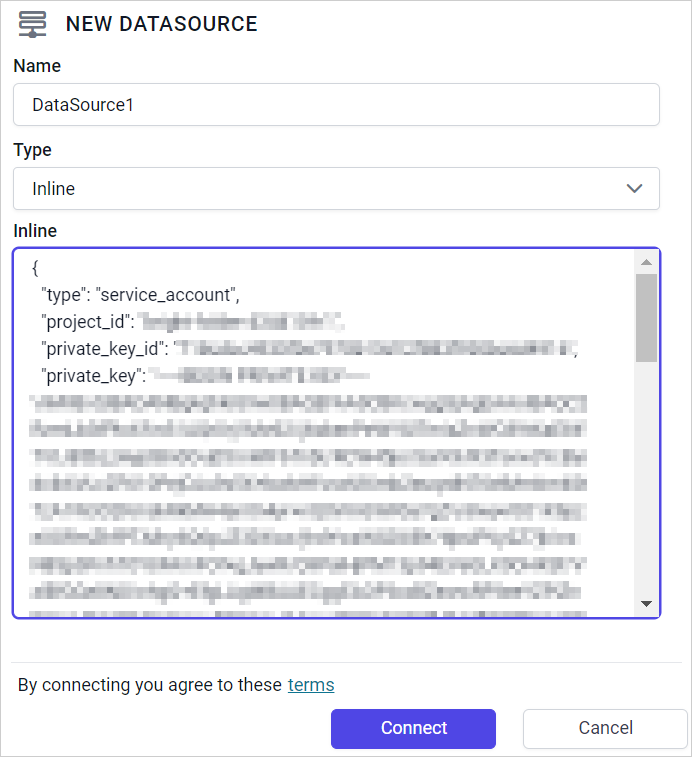
-
Click
Connectto open the query design pane. Enter the required query and execute it. The corresponding values appear in a grid for preview.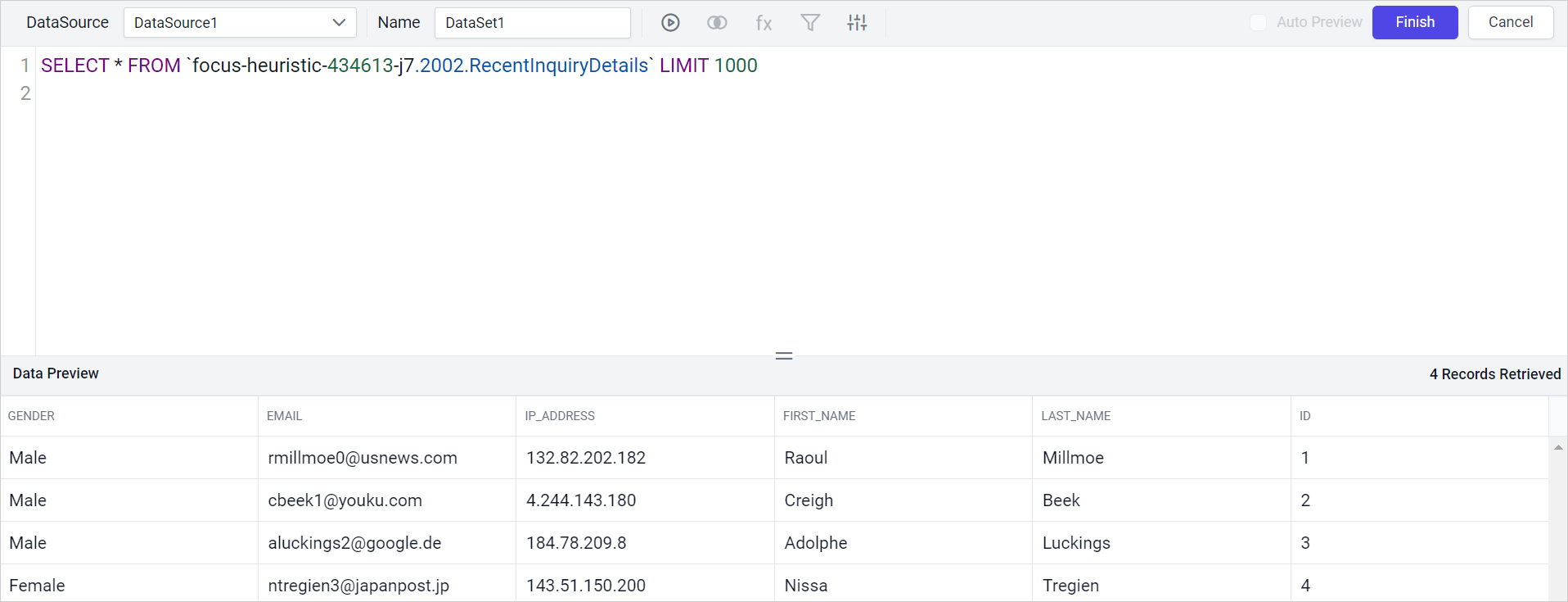
-
Click
Finishto save the data source with a relevant name and continue designing the report.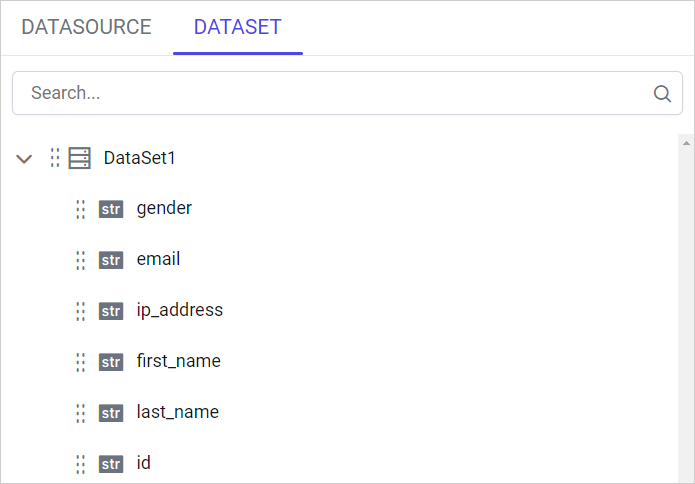
How do I upload the JSON key file from disk?
To upload the Google BigQuery JSON key file in the Bold Reports® Web Report Designer, choose File as the type and browse for the file.
-
Choose
Filefrom theTypedrop-down menu.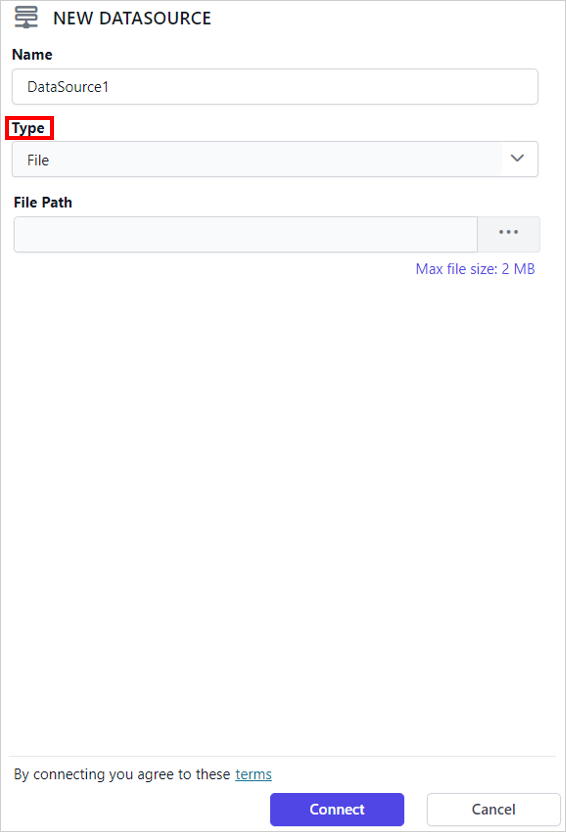
-
Click the three-dot button to open the upload box. Browse for the JSON file downloaded in Create Service Account.
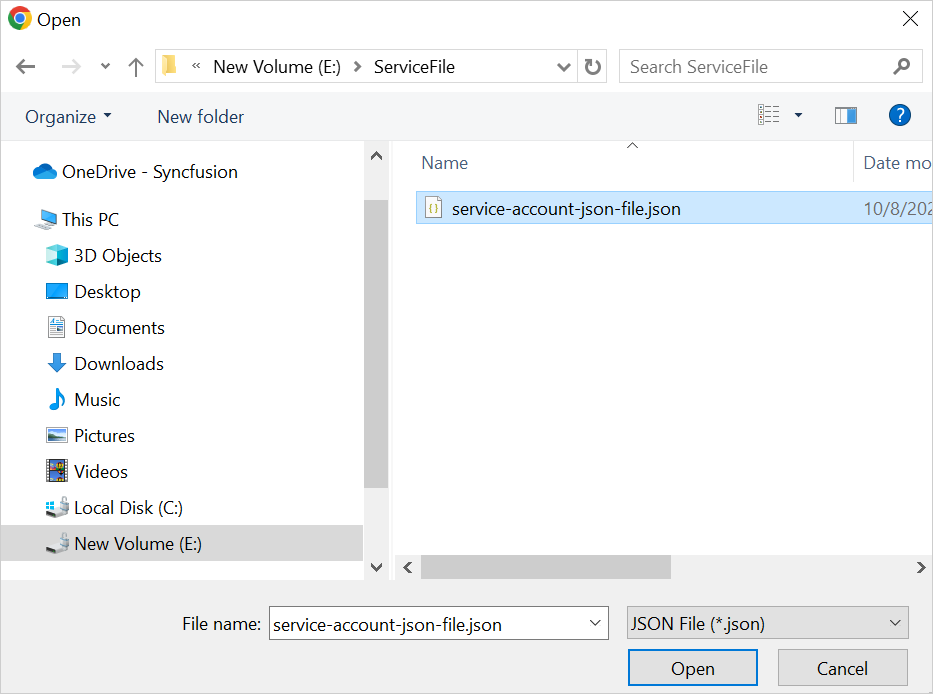
-
Click
Connectto open the query design pane.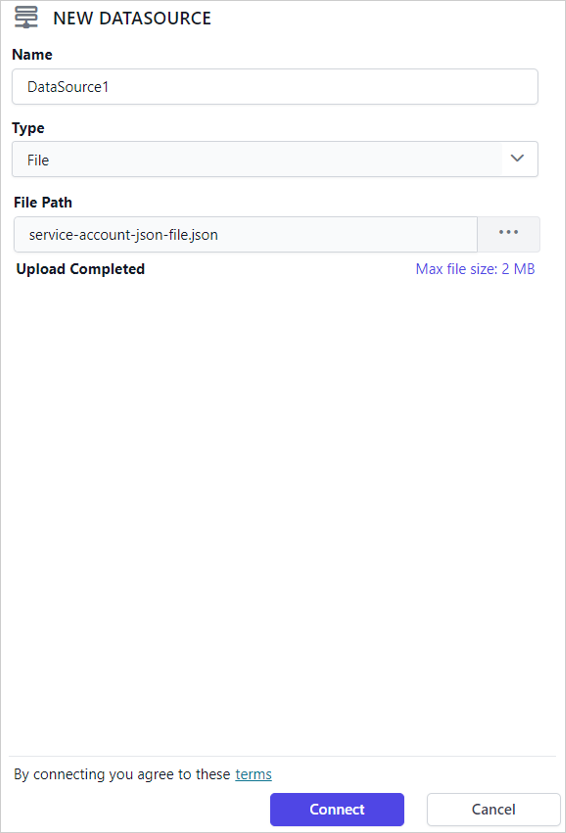
-
Enter the required query and execute it. The corresponding values appear in a grid for preview.
-
Click
Finishto save the data source with a relevant name and continue designing the report.
Frequently asked questions
How does Bold Reports® authenticate to Google BigQuery?
Bold Reports® connects through a Google Cloud service account, using a service account JSON key file.
Which role should I assign to the service account in production?
In production environments, avoid assigning the Owner, Editor, or Viewer roles. Assign a predefined or custom role based on your needs.