Connect to AWS Open Search
To connect Bold Reports® to AWS Open Search, open the Data configuration panel in the Web Report Designer and create an AWS Open Search data source. You can then add tables in design view or write a custom query.
How do I create an AWS Open Search data source?
To create an AWS Open Search data source in the Bold Reports® Web Report Designer, open the Data configuration panel and choose the Elastic Search connection type.
- Click the Data icon in the configuration panel.
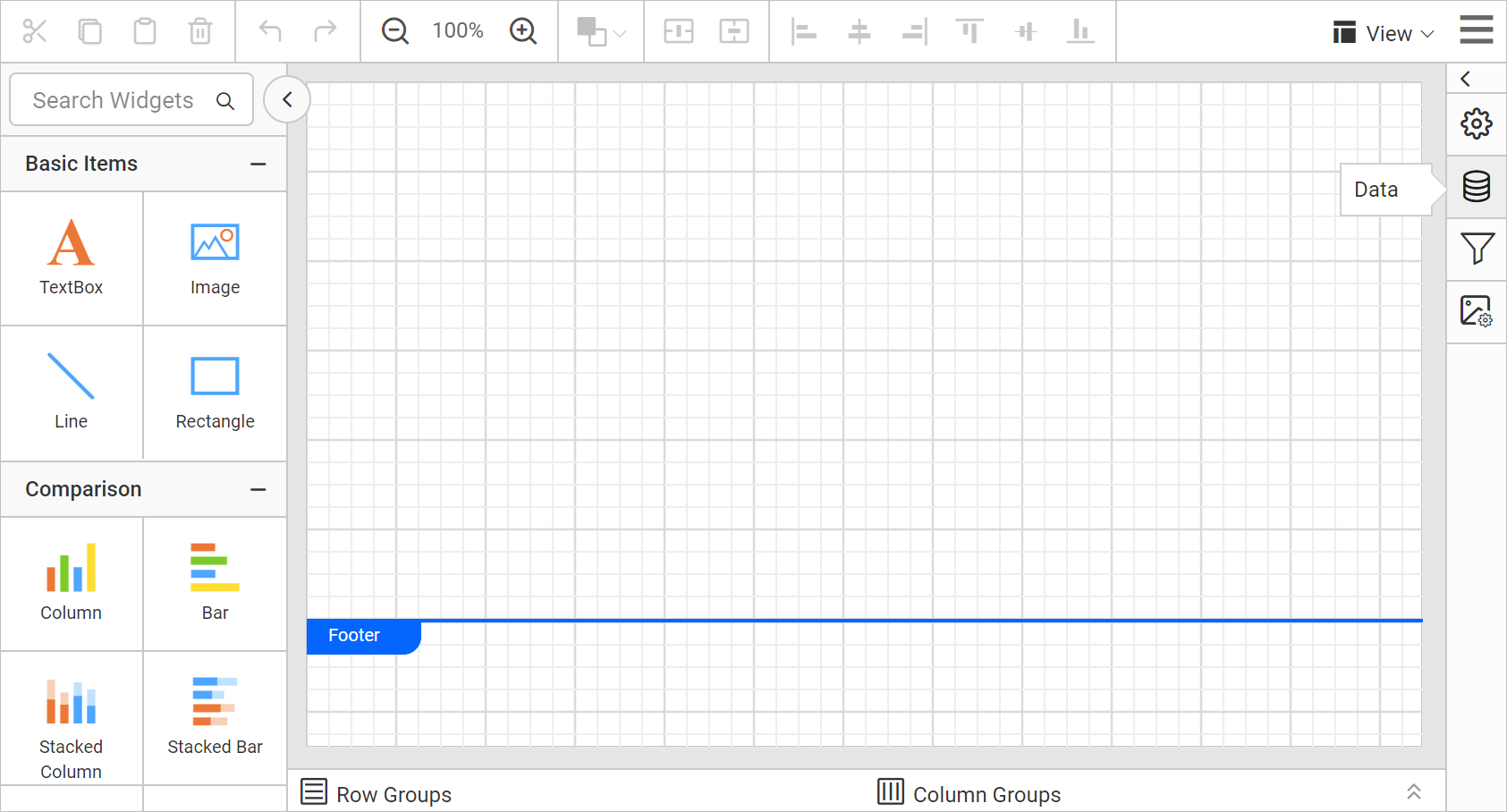
- In the
DATAconfiguration panel, click theNEW DATAbutton.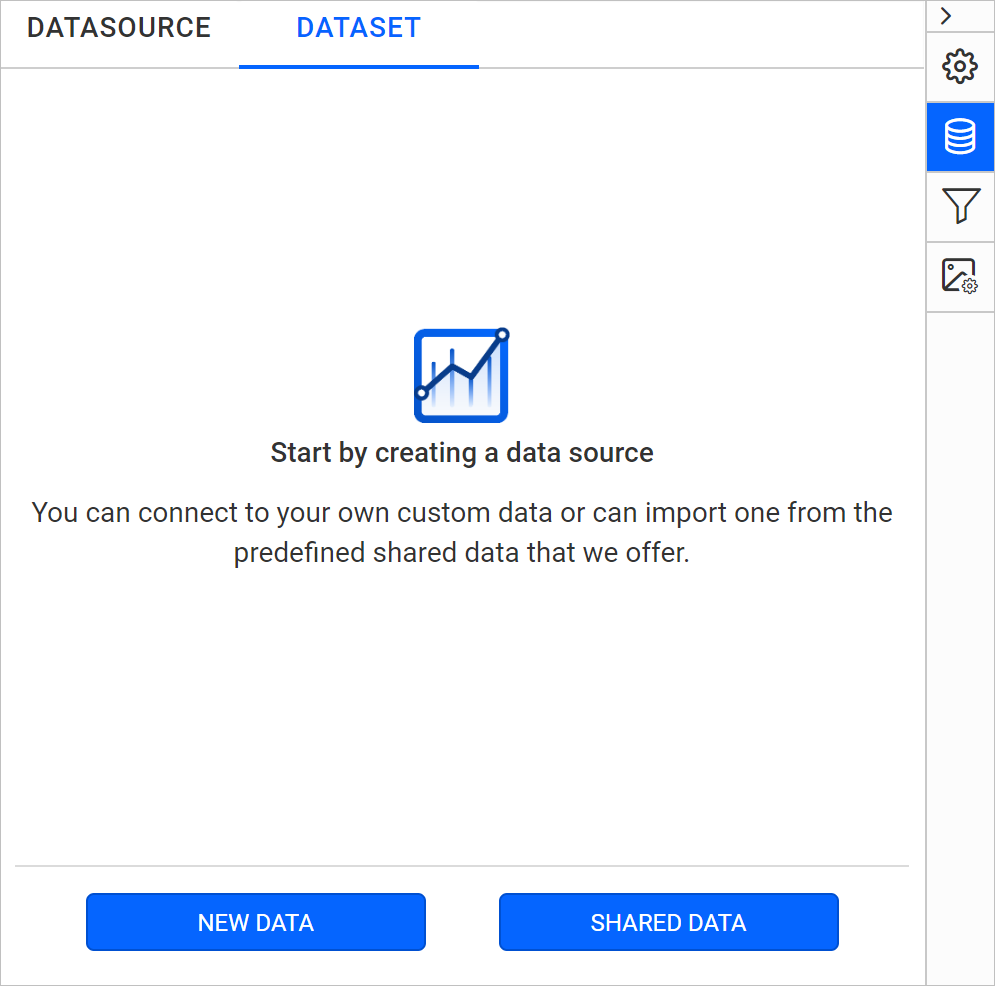
- In the connection type panel, choose the
Elastic Searchdata source type.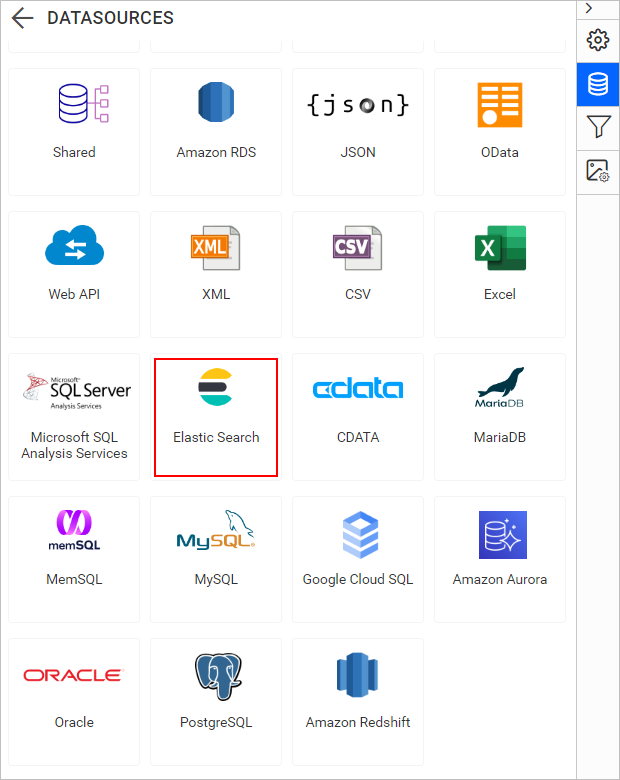
How do I configure the basic options?
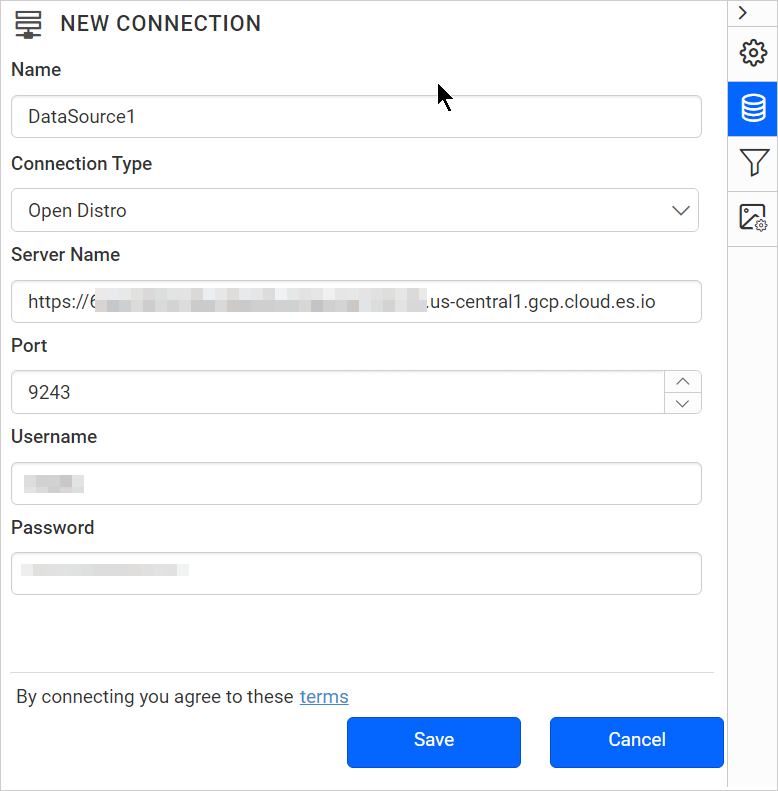
When you create a new data source in the Web Report Designer, the NEW DATASOURCE panel shows the basic options.
- Specify the data source name without special characters in the Name field.
- Choose a connection type. Two Connection types are available in the Elastic Search connector:
- Elasticsearch SQL
- Open Distro
- To connect to an Amazon Web Service hosted Open Search instance, use Open Distro as the connection type.
- Enter a valid Open Search server or host name in the Server Name field.
- Enter the Port in which the server is running in the port text box.
- Enter a valid username in the Username text box.
- Enter a valid password in the Password text box.
After you connect the data source, the data design view page opens. The page lists the schemas and tables from the AWS Open Search server in a treeview section.
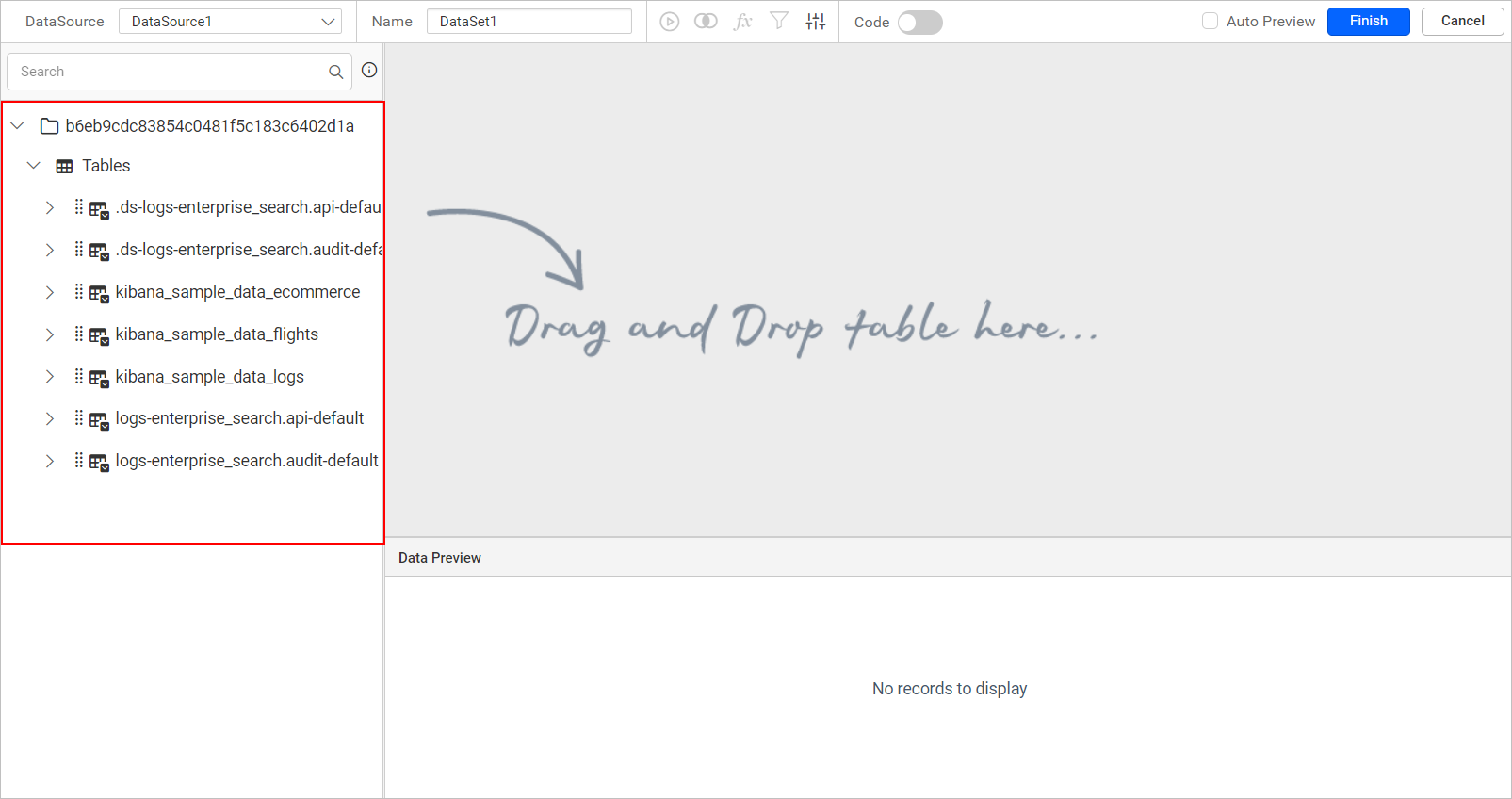
Drag and drop the required table from the tree view list.
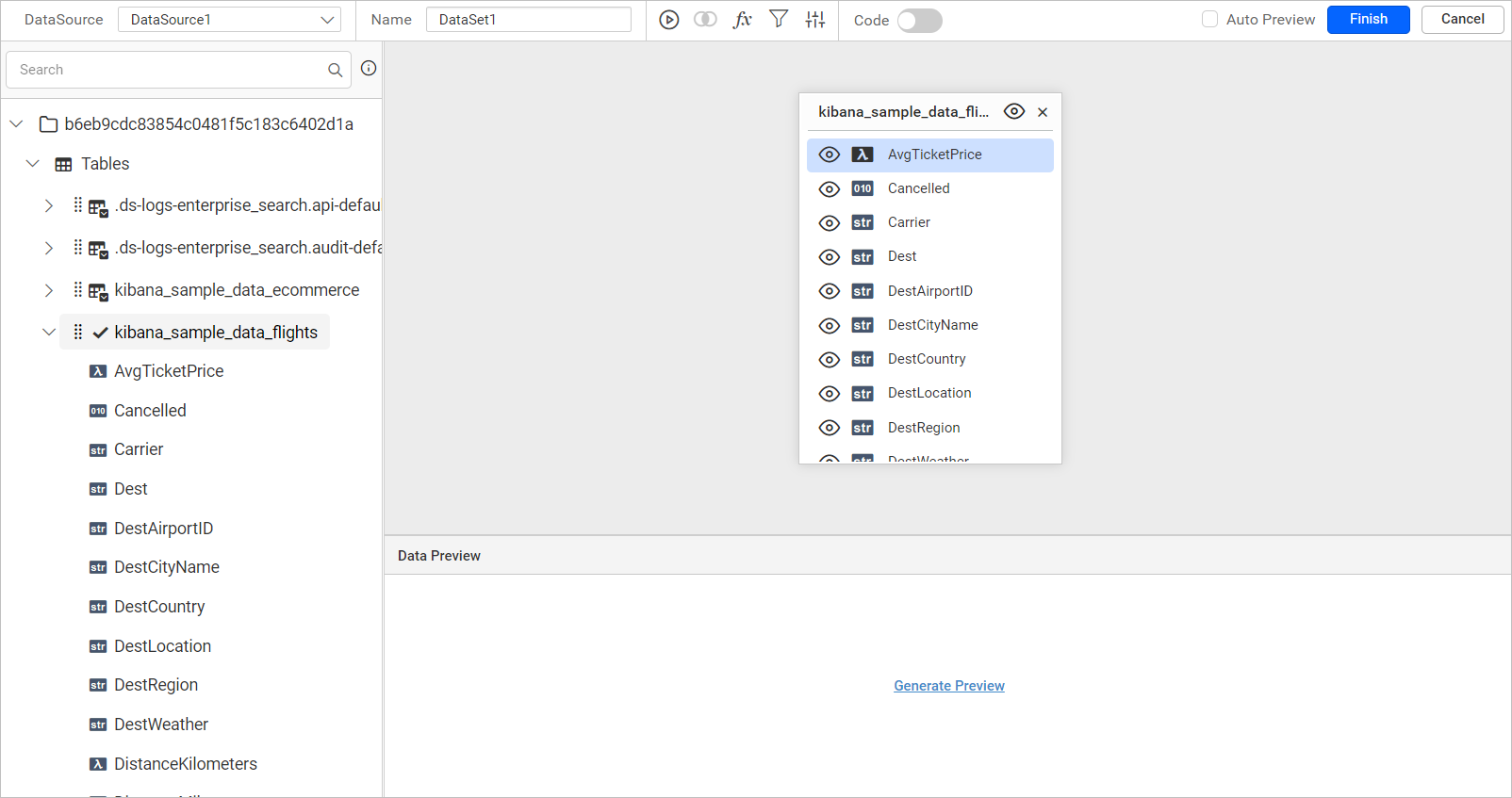
Multiple joins are not supported for the AWS Open Search data source in Bold Reports®.
Click Finish to save the data source with a relevant name and continue designing the report.
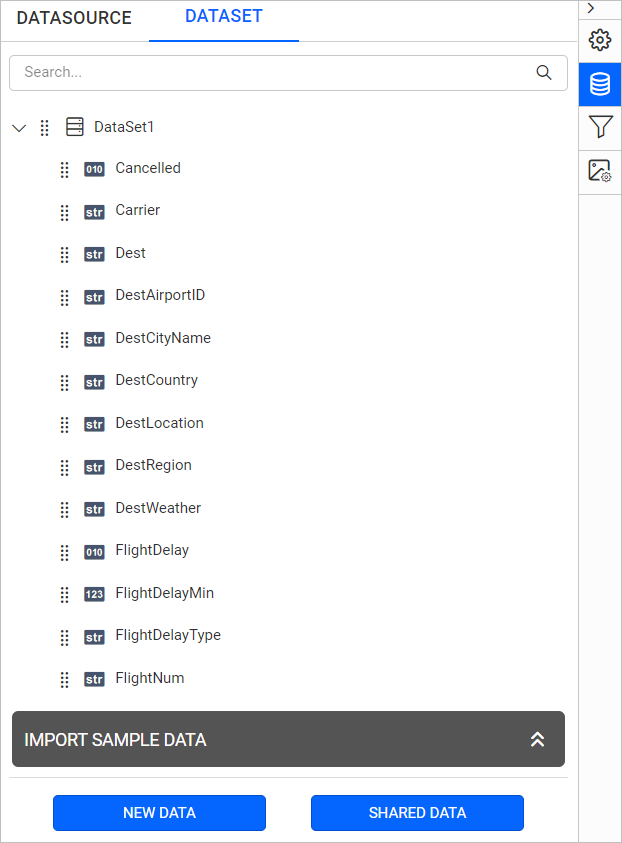
How do I connect through a custom query?
The Bold Reports® Web Report Designer lets you define the data source of certain data connections with a manually written query instead of dragged tables. The custom query applies to connection types such as Elasticsearch SQL and Open Distro connections.
After the connect action, the query design view opens.
How do I switch to code view?
The Bold Reports® query design view opens in design view by default. To switch to code view, enable the slider option in the tools pane, as highlighted in the following image.

The query editor pane then switches to code view, as shown in the following image.
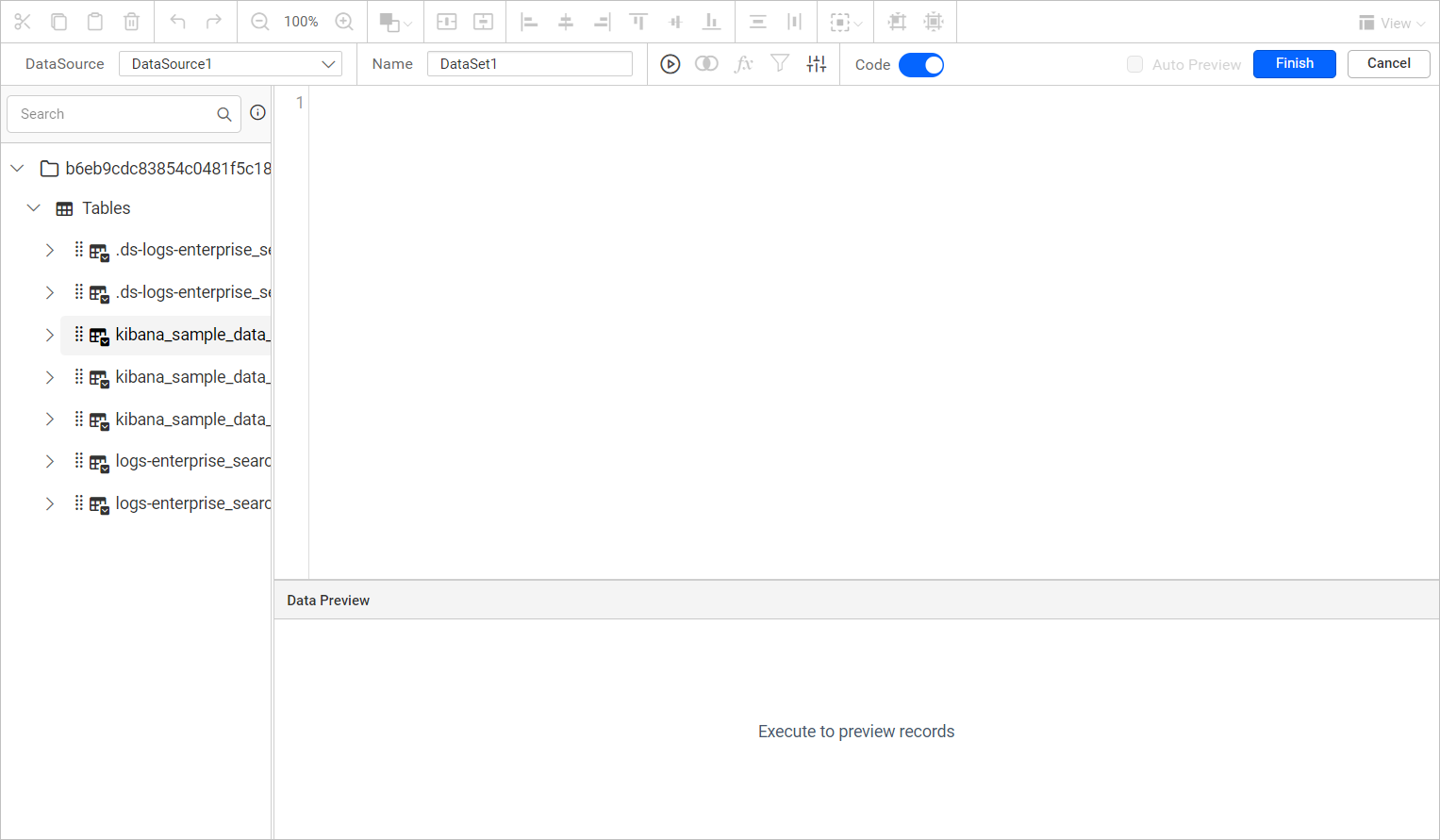
How do I write and execute a query?
In the Bold Reports® Query Editor pane, you can write your own query to access table schema information and retrieve data from your database.
- Write your query in the
Query Editorpane. - Click the
Executeoption in the tools pane. The data for your query appears at the bottom of theQuery Editor.
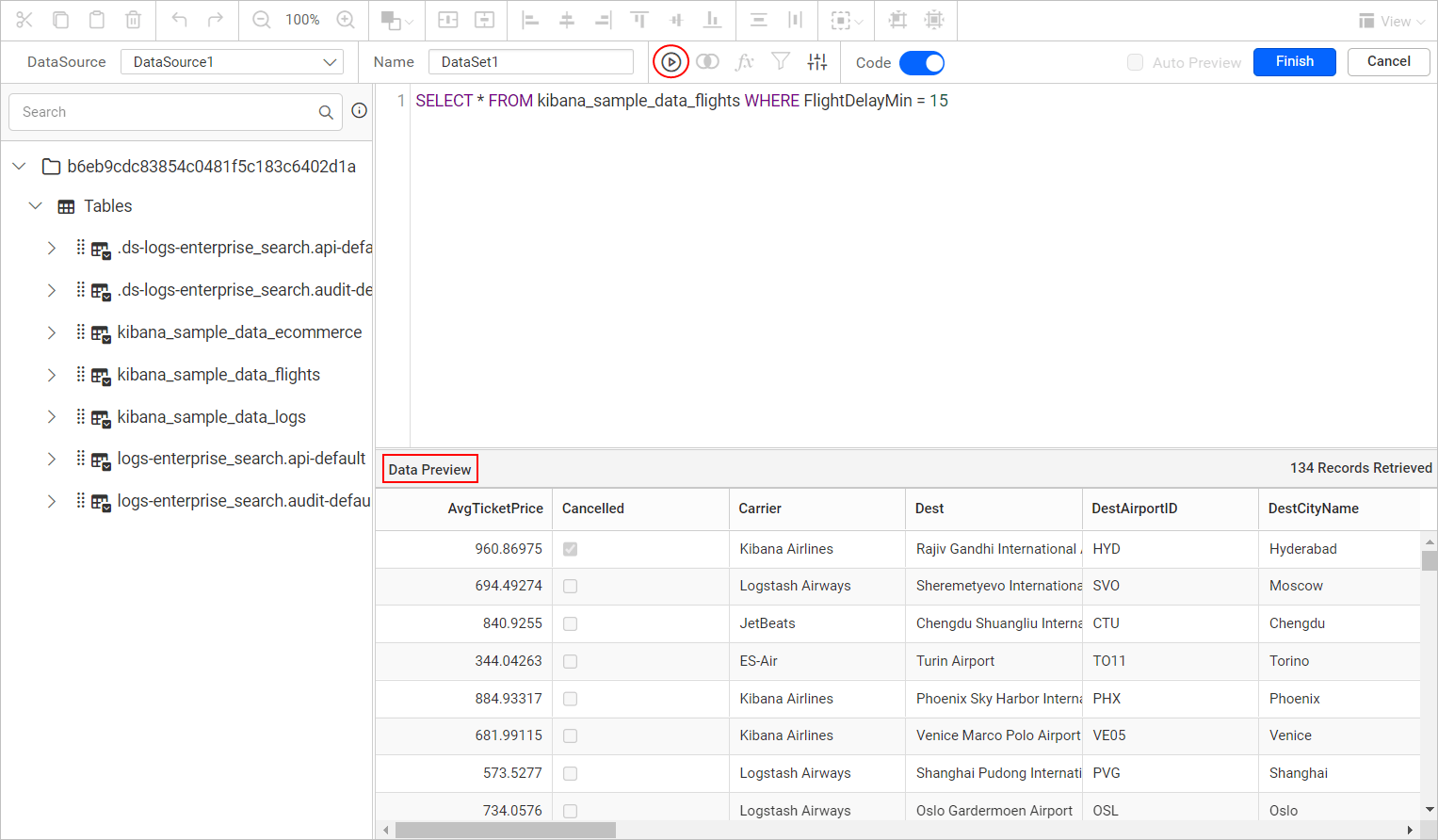
If you disable the Code Slider in the tools pane to switch back to design view, an alert message asks you to confirm removing your query. Proceeding with this action resets the code view query.
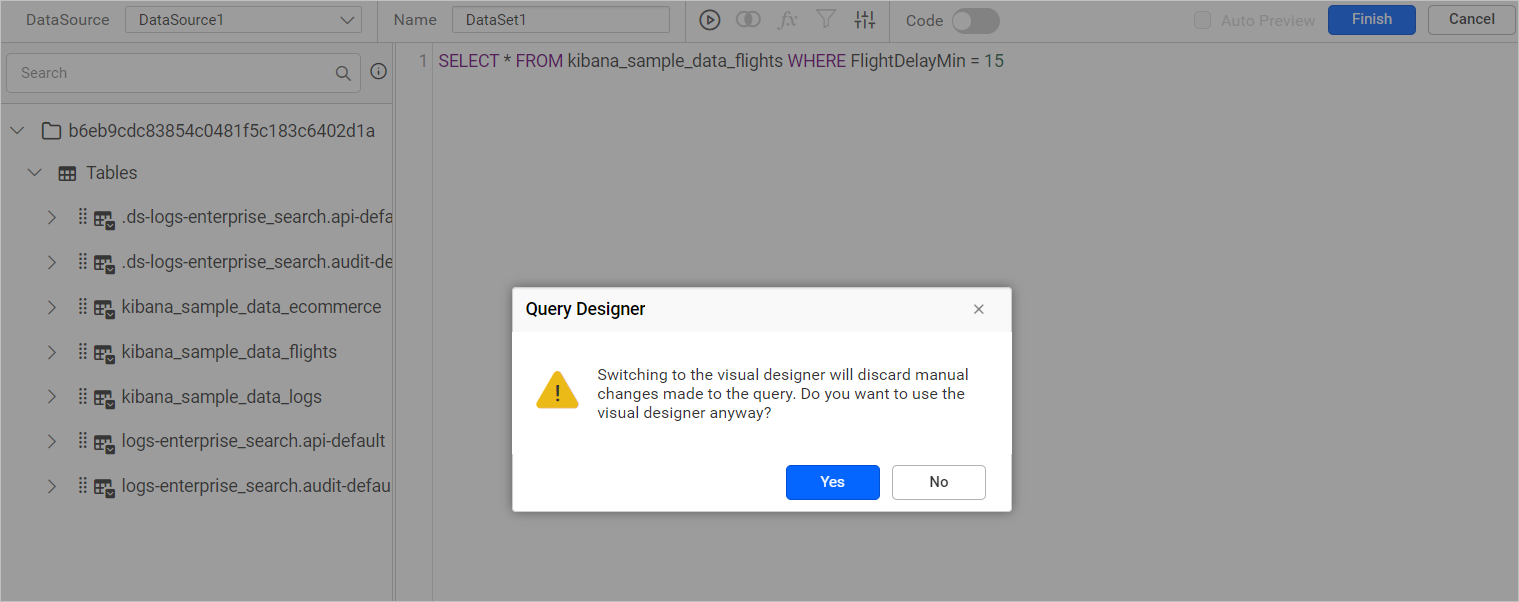
Click Yes to discard the query and go to design view, or click No to keep it. Save the data source by clicking the Finish button.
How do I view the query for tables added in design view?
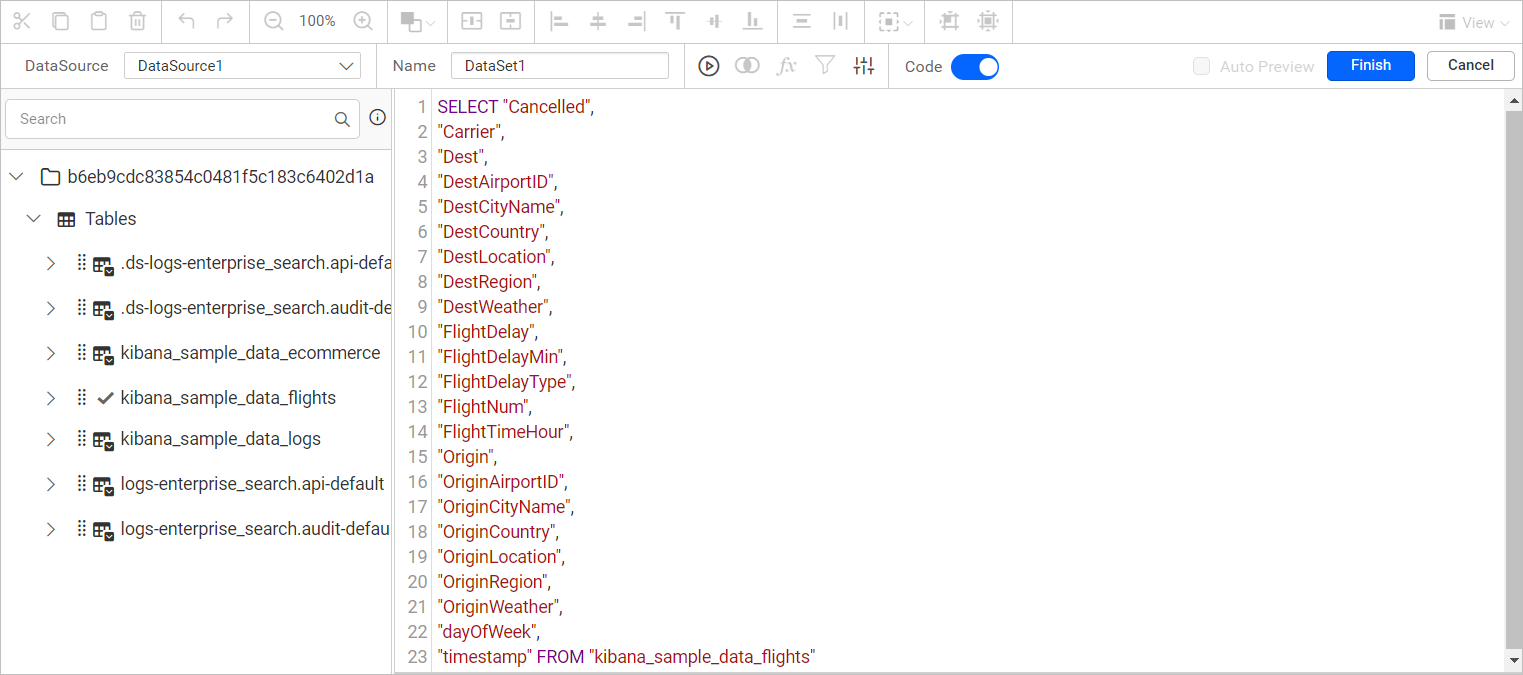
The Bold Reports® Query Editor pane shows the query for a data source you already created in design view.
For example, drag the kibana_sample_data_flights table in design view.
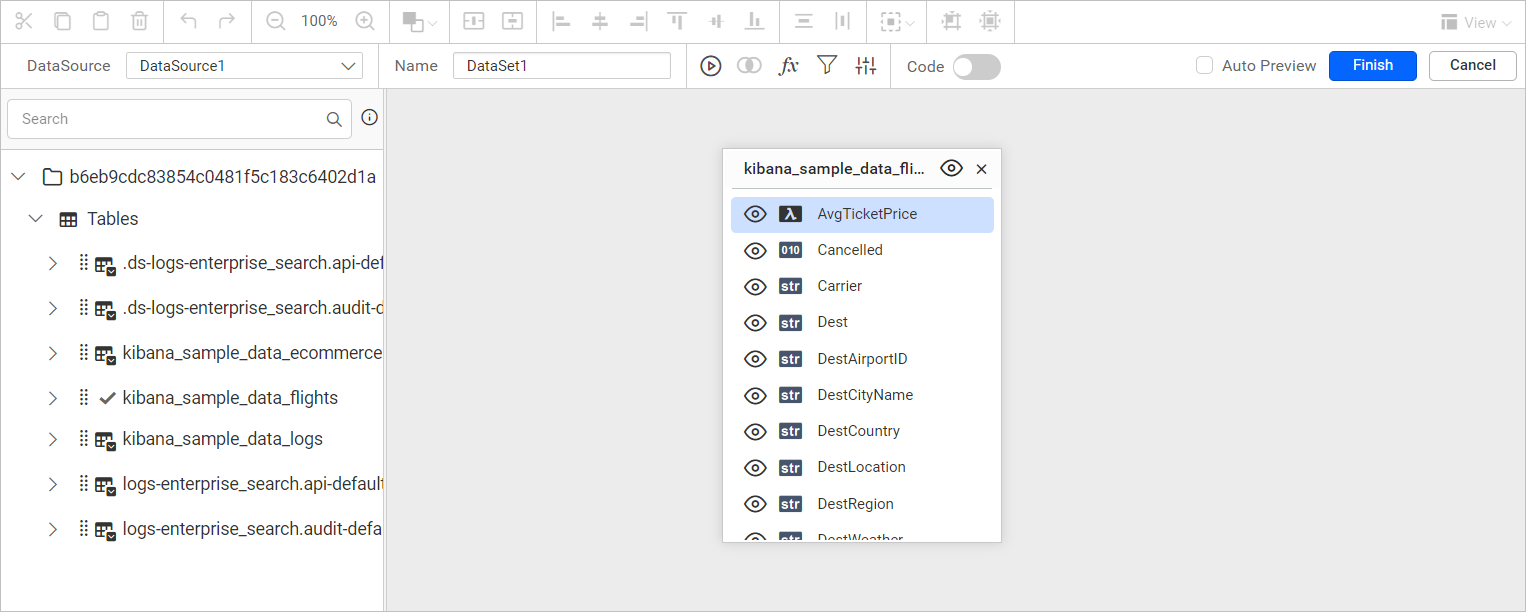
Then, enable the Code Switcher to view the query. The query reflects the changes made in the table.
Frequently asked questions
Which connection type should I use for AWS Open Search?
Use the Open Distro connection type to connect to an Amazon Web Service hosted Open Search instance.
Does the AWS Open Search data source support multiple joins?
No. Multiple joins are not supported for the AWS Open Search data source in Bold Reports®.
What happens to my query if I switch back to design view?
An alert asks you to confirm removing your query. Clicking Yes discards the query and resets the code view query.