How do I use PostgreSQL as a data source in Cloud Reporting?
The Bold Reports® Cloud Web Report Designer connects to a PostgreSQL data source so you can visualize and analyze its data in reports.
What does the PostgreSQL connector support?
The Web Report Designer connects to PostgreSQL with the following options.
| Item | Supported |
|---|---|
| Default port | 5432 |
| Query design | Drag and drop tables from the table schema in the query design view |
| Connection options | Basic options (server, port, username, password, database) or advanced options (your own connection string) |
| Authentication types (advanced options) | PostgreSQL Server, Prompt, None |
| Save password | Embeds the credentials in the report saved in the Report Server. A downloaded report does not keep them. |
How to create a PostgreSQL data source
You create a PostgreSQL data source from the DATA configuration panel of the Web Report Designer by clicking NEW DATA and selecting PostgreSQL.
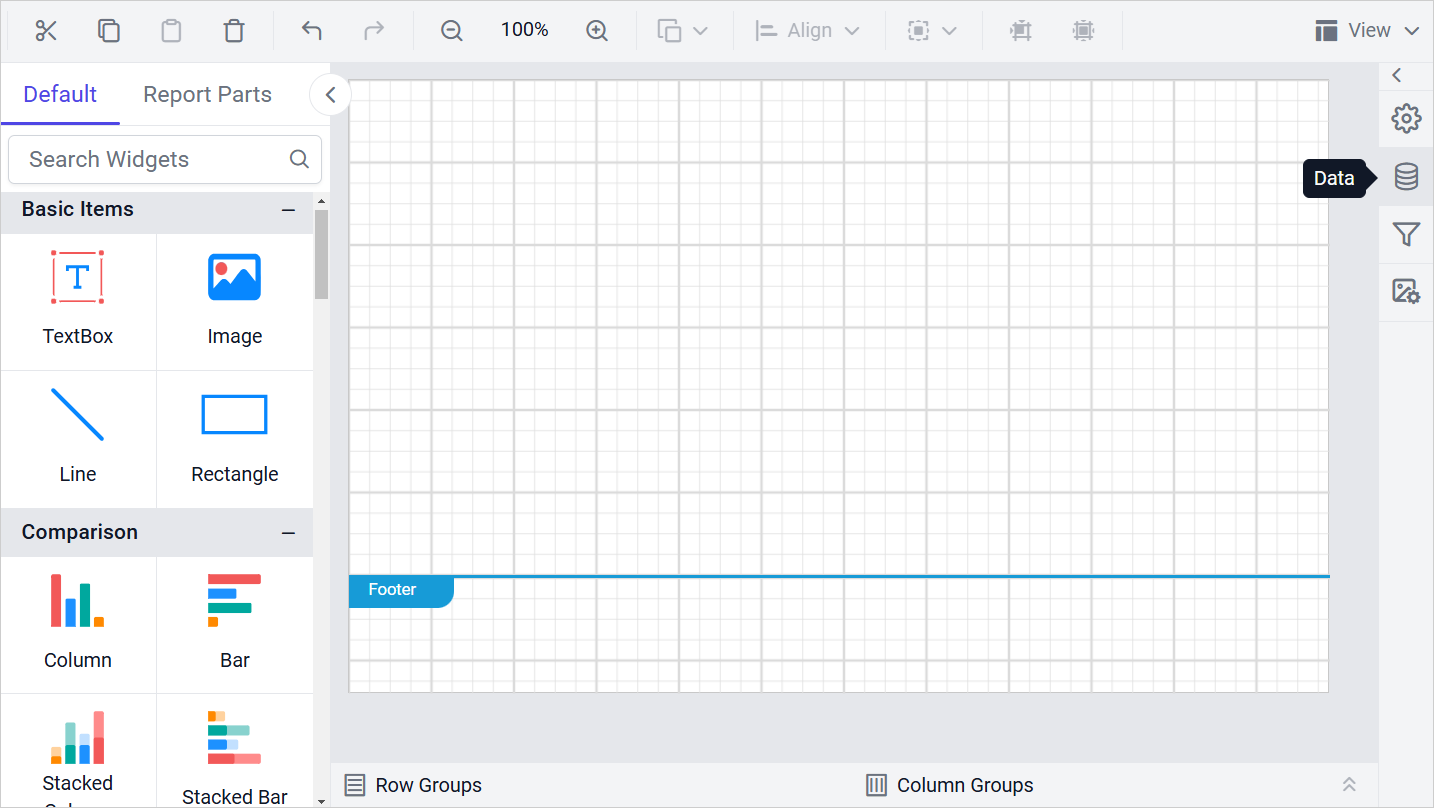
- Click the Data icon in the configuration panel.
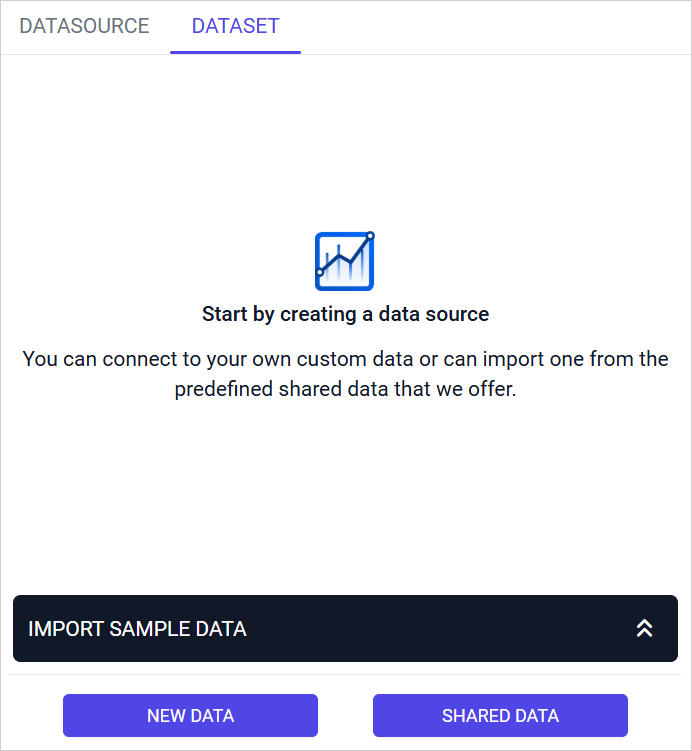
- In the DATA configuration panel, click NEW DATA.
- In the connection type panel, select PostgreSQL.

Create PostgreSQL data source with basic options
The NEW DATASOURCE panel opens with basic options when you create new data. Enter the connection details as follows:
- Specify the data source name without special characters, in Name field.
- In the Server Name field, enter the remote server name, such as
myserver.domain.com. - In the Port field, enter the port number. The default port is
5432. - Specify the username of your PostgreSQL server in Username field.
- Specify the password of your PostgreSQL server in Password field.
- Enable the Save password option to embed the credentials within the report when saving it in Bold Reports® Report Server.
- Choose or enter an existing valid database, such as Northwind.

- Click Connect to connect to the PostgreSQL database.
- Drag a table from the table schema into the query design view.

- Click Finish to save the data source and continue designing the report.

Create PostgreSQL data source with advanced options
To connect to PostgreSQL with advanced options, click Advanced Options in the New Data panel.

Now, the panel is switched to advanced options. In advanced options, you can build your own connection string.
Set the connection string and input the username and password of PostgreSQL server.

Drag and drop the table from the table schema in the query design view page.
Click Finish to save the data source with a relevant name to proceed with designing report.
Click on
Basic Optionsto switch back to the basic connection settings.

Connection string
Connection strings are the text representation of connection properties for a data provider.
If the database is on your local computer, Specify the connection string as follows:
Host=localhost;Port=5432;Database=Northwind;User ID=postgres;Password=1234If the database is located in another server domain, specify the connection string as follows:
Host=myserver.domain.com;Port=5432;Database=Northwind;User ID=postgres;Password=1234;Authentication types for advanced connection
The PostgreSQL advanced options support three authentication types: PostgreSQL Server, Prompt, and None.

PostgreSQL Server - A user name and password must be supplied to access the PostgreSQL Server database, the credentials might be for a database login. The credentials are passed to the data source for authentication.

Enable the Save password option to embed the credentials within the report when saving it in Report Server.
When you download the report, the credentials are not saved with the report data.
Prompt - When you configure a data source connection to use prompted credentials, each user who accesses the report must enter a user name and password on preview action to retrieve the data.

None - Choose the authentication type as None, when the authentication details or any other arguments required to connect with the data source are provided in connection string.
Frequently asked questions
What connection string format does the PostgreSQL connector use?
The connection string uses semicolon-separated key and value pairs, for example Host=<server>;Port=5432;Database=<database>;User ID=<user>;Password=<password>. Enter it in Advanced Options.
Do I need to write SQL to query PostgreSQL?
No. After you connect, drag and drop tables from the table schema in the query design view, then click Finish to save the data source.
Why can’t Cloud Reporting connect to my PostgreSQL server?
Cloud Reporting reaches your PostgreSQL server from fixed IP addresses. Allow inbound connections from those addresses in your database firewall or security group. See IP addresses to whitelist for remote database access.
How do I make each viewer enter their own PostgreSQL credentials?
In Advanced Options, set the authentication type to Prompt. Each user who opens the report enters a user name and password on preview.
Why is PostgreSQL missing from the connection type panel?
An administrator may have disabled the PostgreSQL connector. Only the connectors enabled on the Settings page of the Report Server appear when you create a data source. See Connectors settings.