Create an RDL report
To create an RDL report in the Bold Reports® Standalone Report Designer, launch the Bold Reports Designer shortcut from your desktop or Start menu, connect to a data source, add a table, and then save and preview the report.
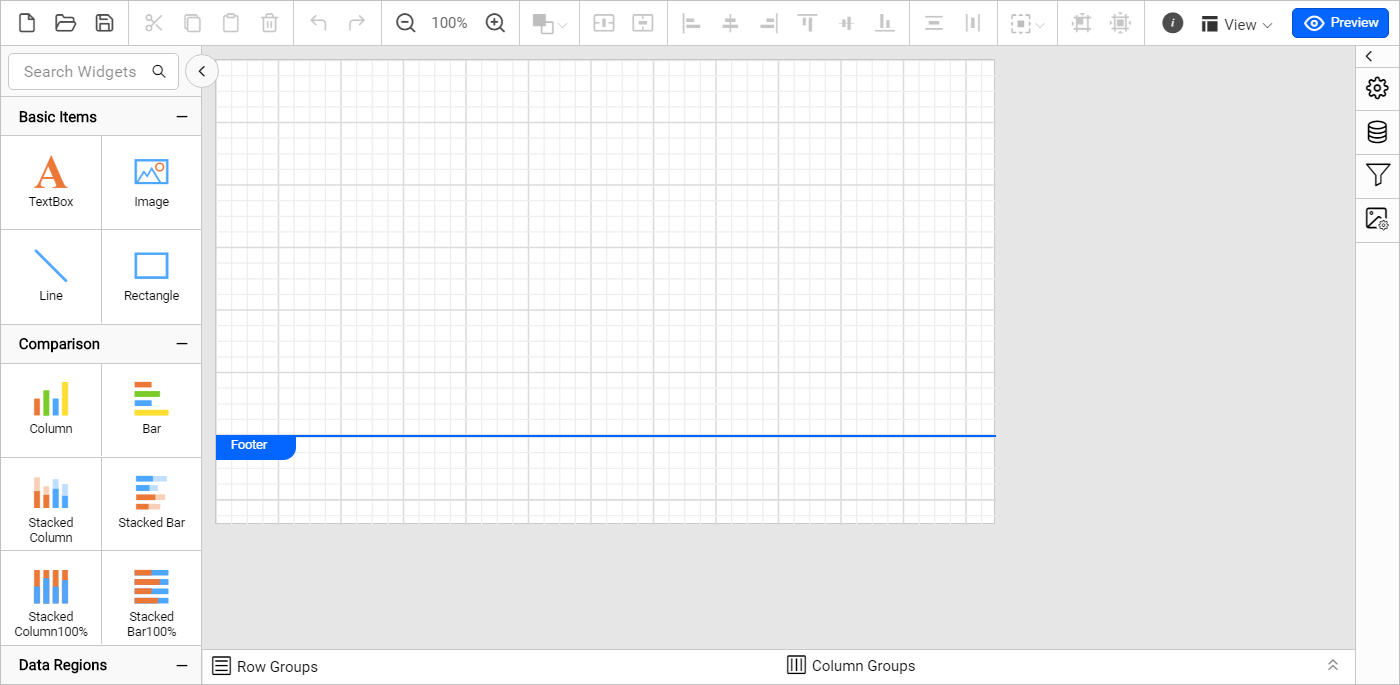
The Standalone Report Designer will be launched with a new blank report.
How do I connect data to an RDL report?
In the Standalone Report Designer, open the Data panel, click New Data, choose a data source type such as SQL, enter the connection details, and click Connect.
- To add a data, click on the Data icon in the
Data Configurationpanel. It opens theDatapanel.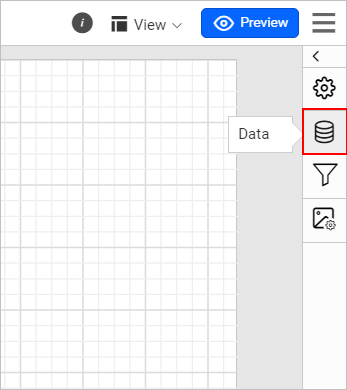
- Click on the
New Databutton in the data panel.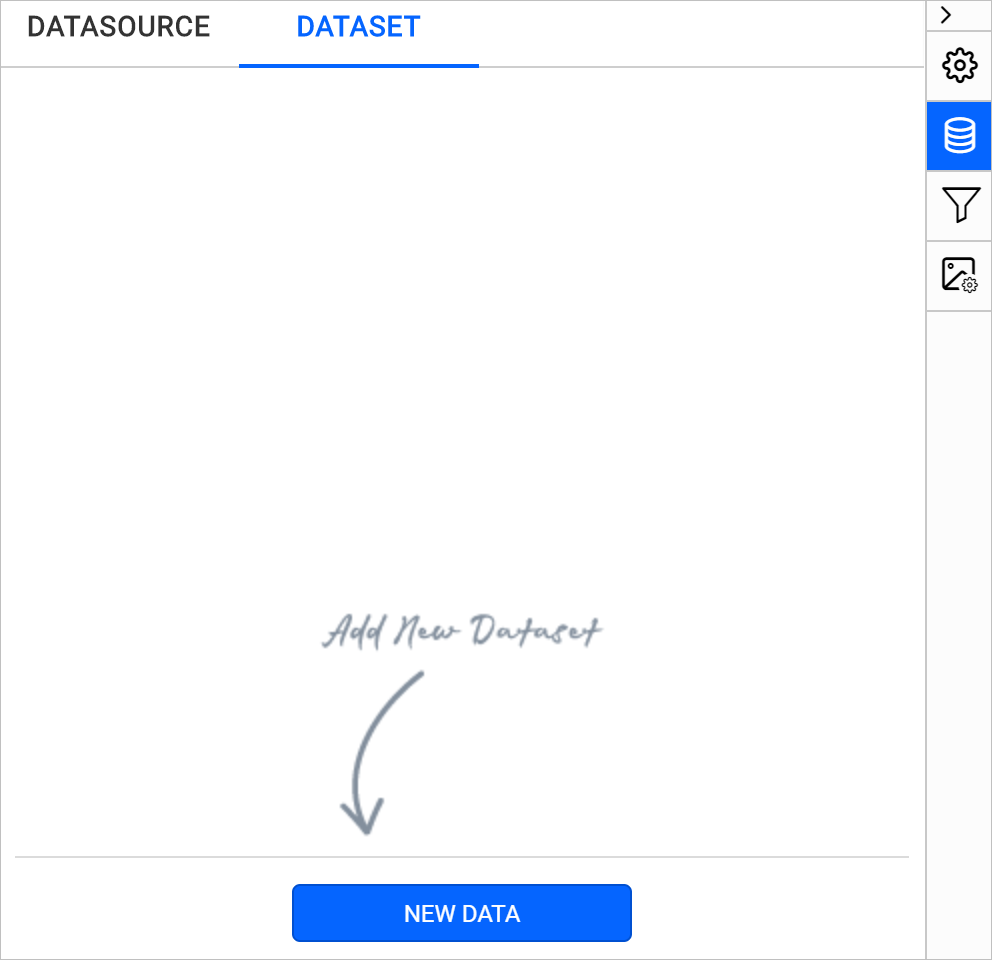
- Choose the
SQLtype to connect the data.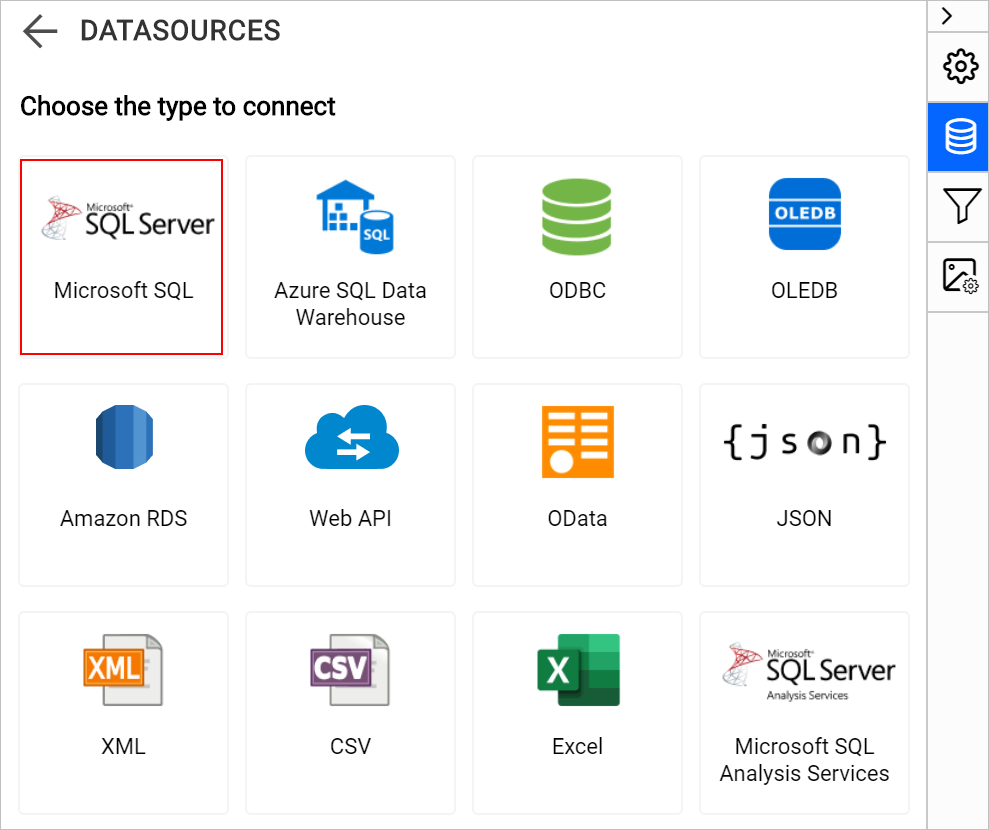
- In the new data source panel,
- In the Name field, specify the data source name without any special characters.
- In the Server Name field, you need to select an existing server in the local network from the dropdown list or specify the specific remote server name like
myserver.domain.com. - In the Authentication Type field, choose Windows or SQL Server authentication.
- If you have chosen SQL Server authentication, specify the username and password of the server.
- In the Database field, choose or enter an existing valid database, e.g., AdventureWorks.
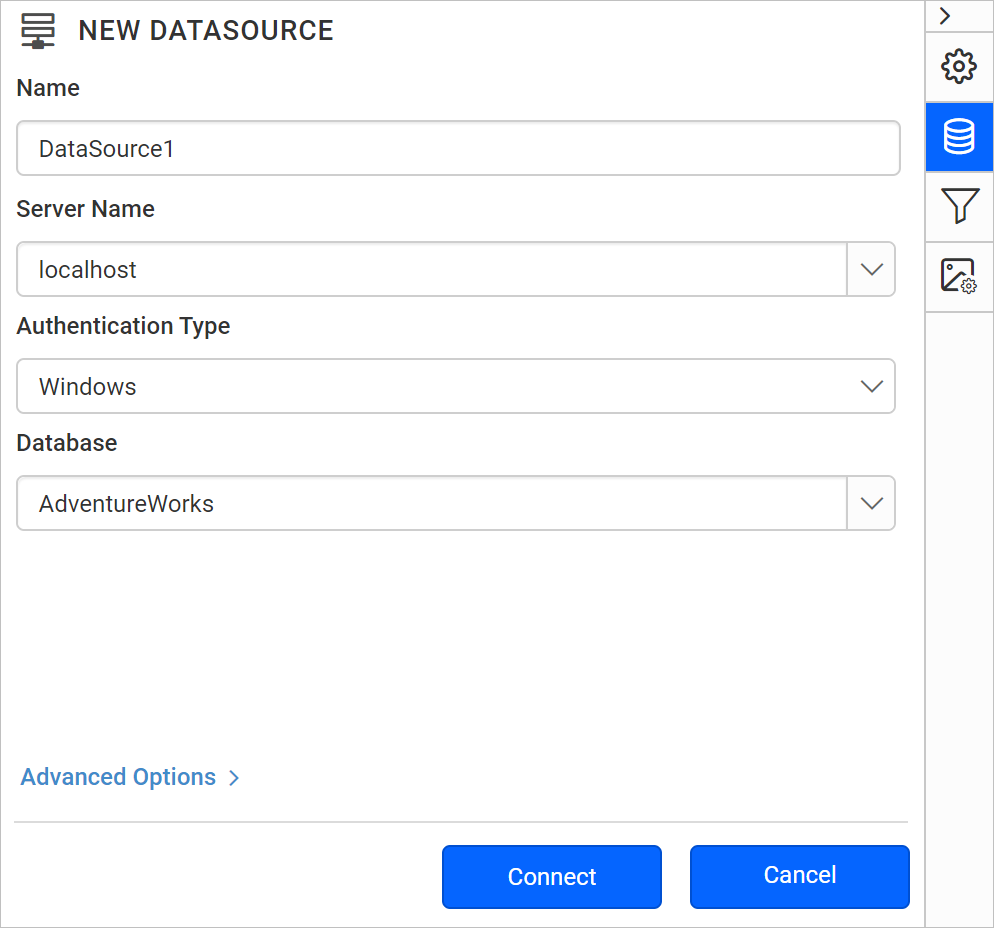
- Click the
Connectbutton. Now the following view will be displayed.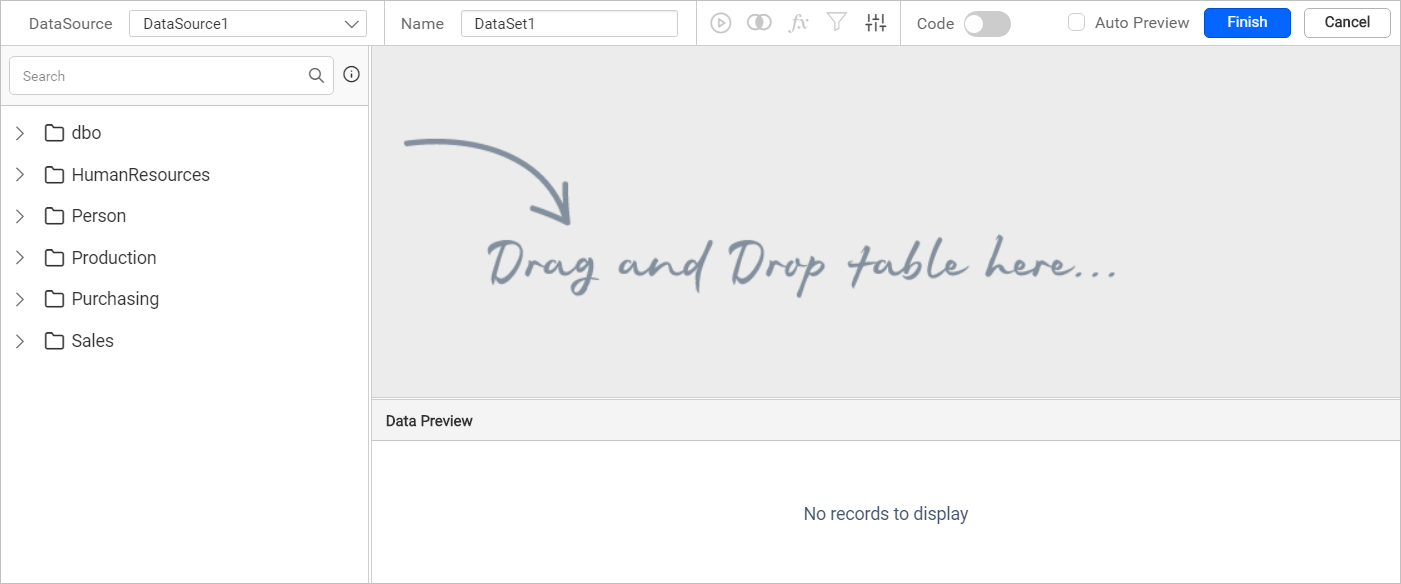
Here, an AdventureWorks database is used for the demonstration.
Edit dataset name
You can edit the name of the Data in the Name field that is available in the toolbar pane.

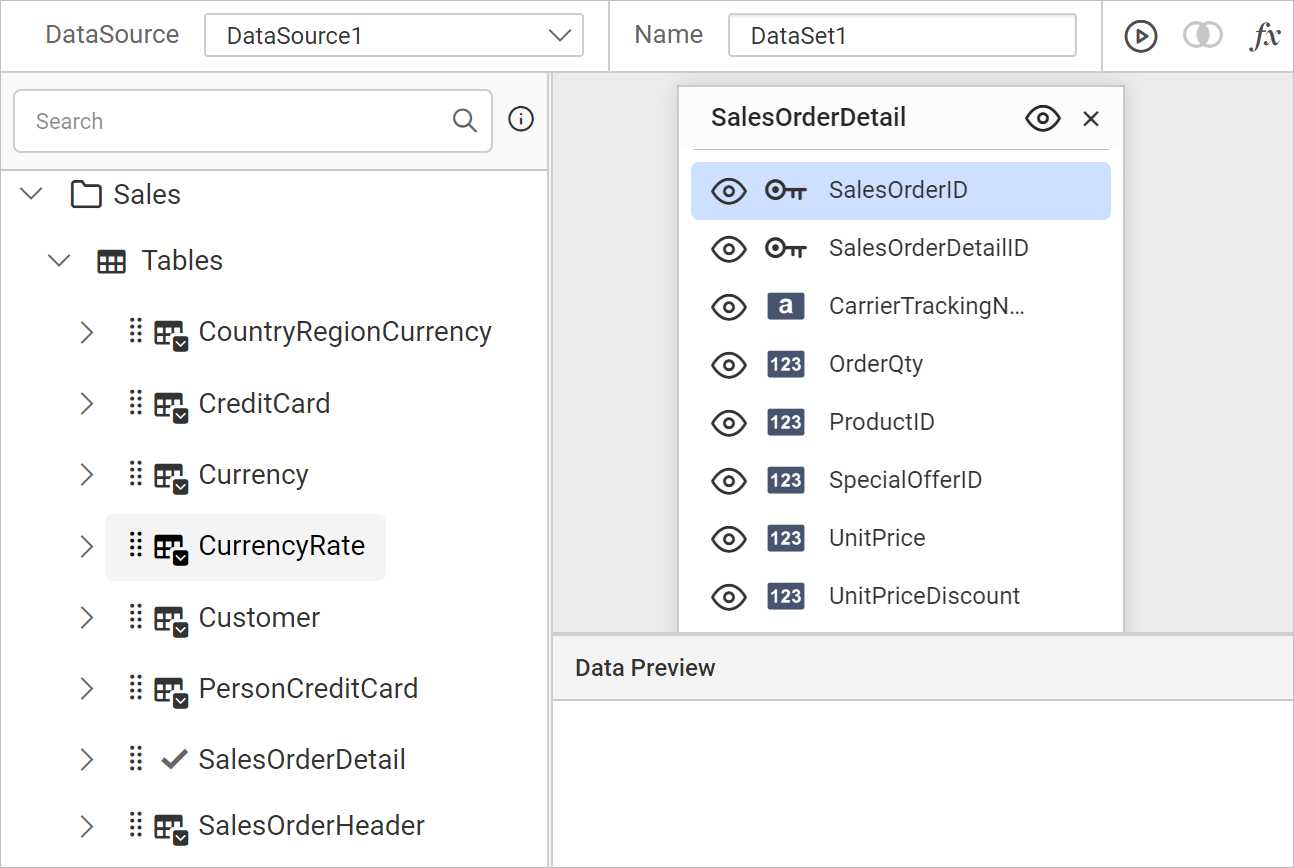
Drag and drop table in query designer
The left pane holds the tables, views, and procedures associated with the connected database. Drag your preferred table or view from the left pane and drop it into the center pane labeled Drag and Drop table here.
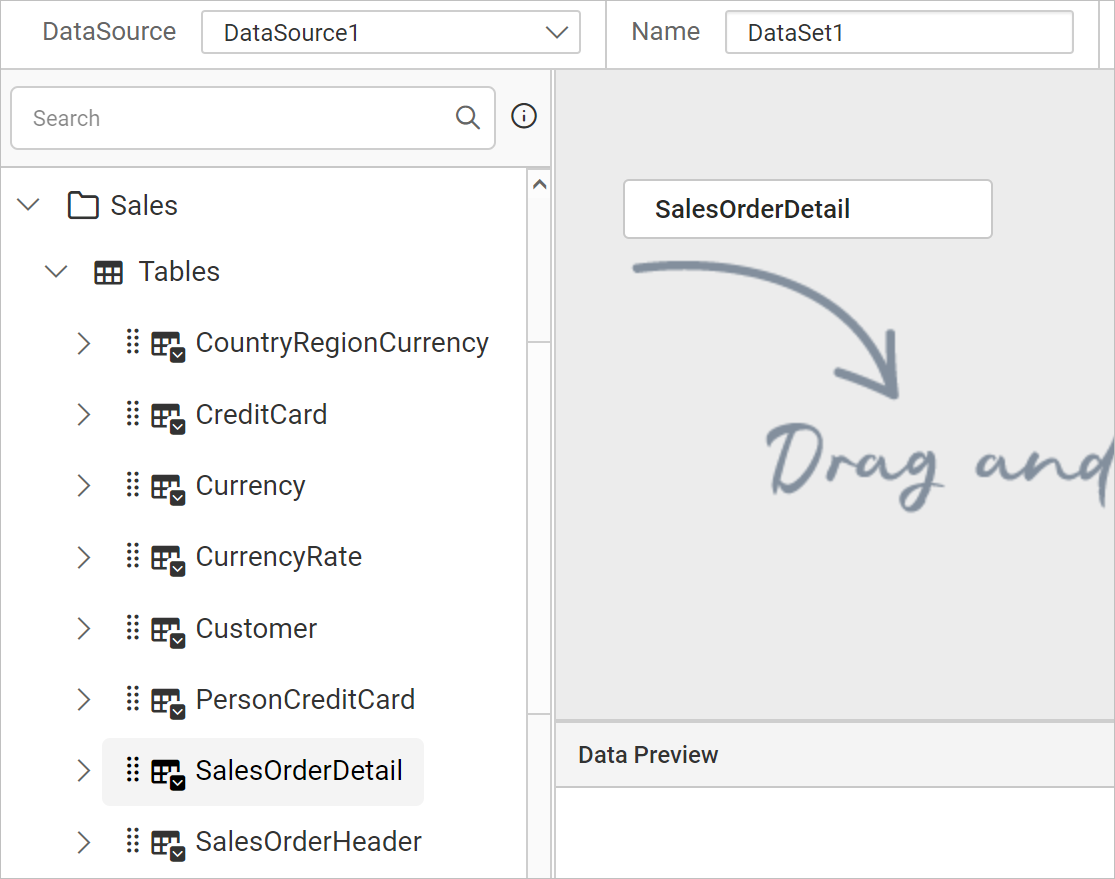
The table is added to the design area.
Execute query
- You can execute and visualize the data by using the
Runoption in the tools pane.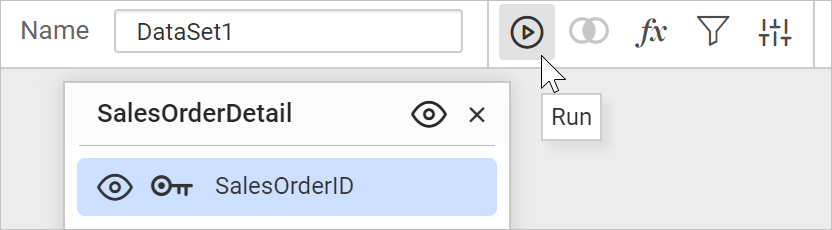
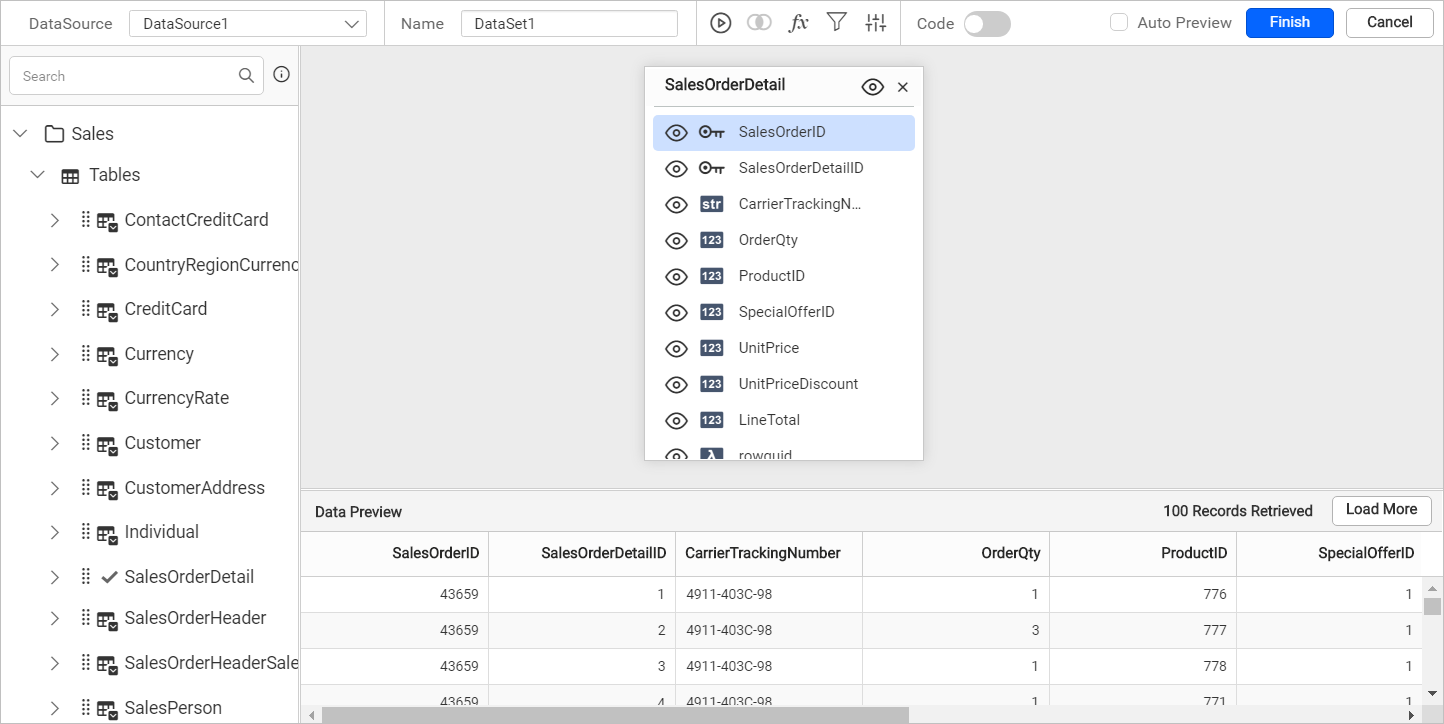
- Now, the data will be retrieved based on the specified query.
Save Data
- Click on the
Finishbutton in the tools pane.
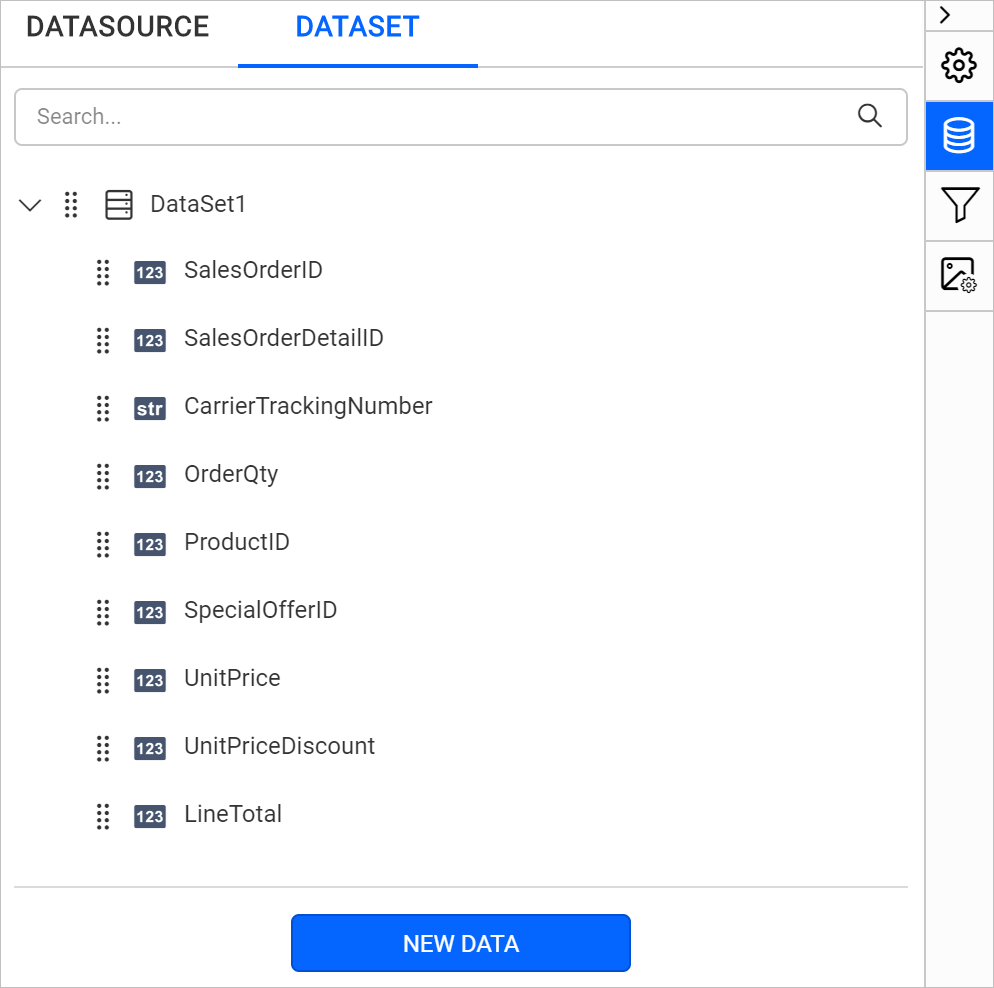
- The dataset is listed in the
Datapanel.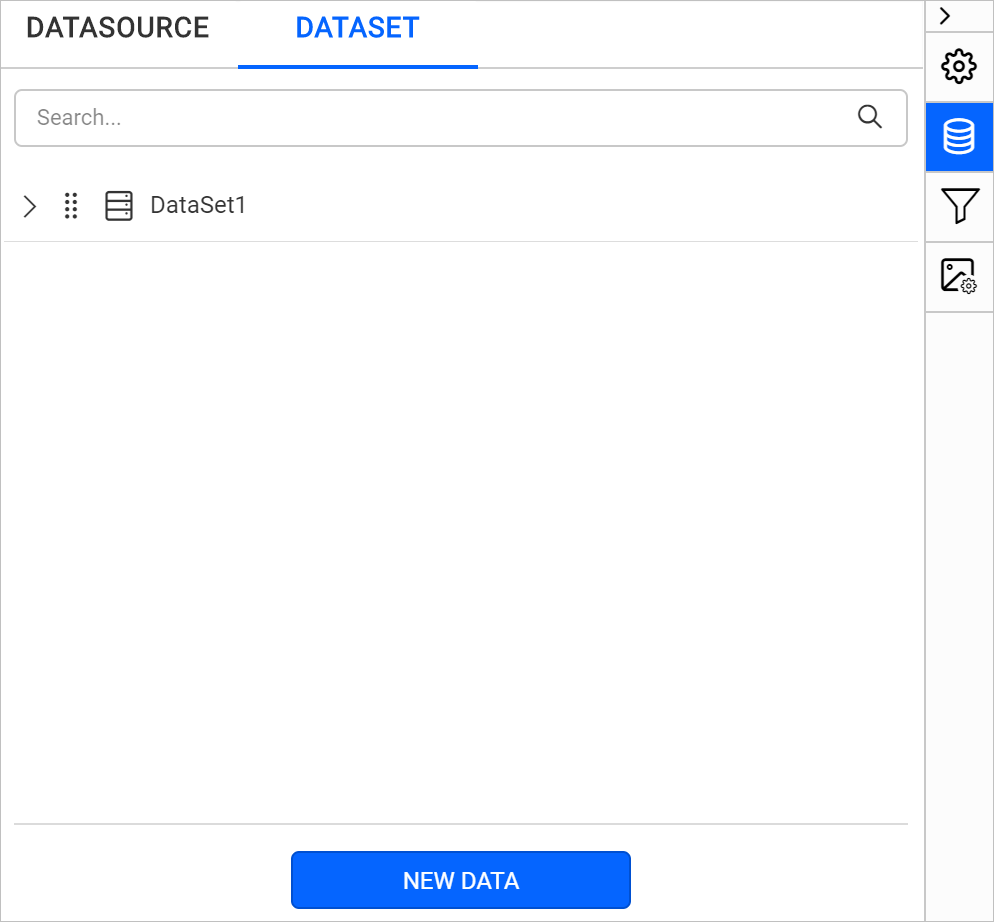
- Expand the icon to view the data fields.
Add table report item
Drag the Table item from Data Regions in the item panel to the design area, assign the dataset, and then add column headers and data fields.
The left pane in the design view consists of basic items, data regions, data visualization, and sub reports to design an interactive report.
Here, the
Tablereport item is used for a demonstration.
- Select the
Tableitem underData Regionsin the item panel, then drag and drop it to the design area.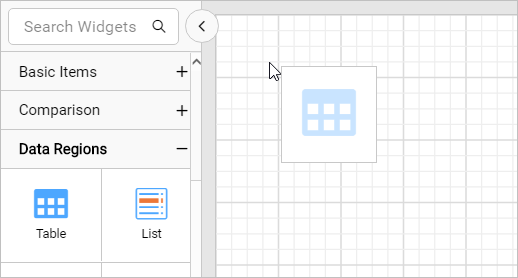
- The above action will render the
Tablewith two rows and three columns in the design area.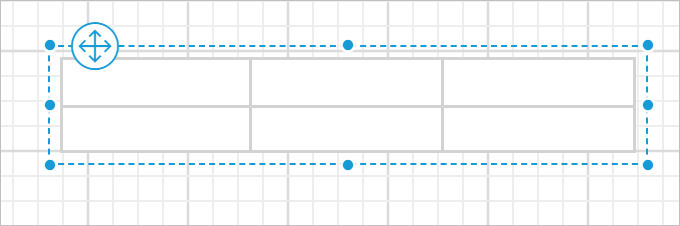
Assign data
Assigning a dataset applies only to report items in the
data visualizationanddata regioncategories.
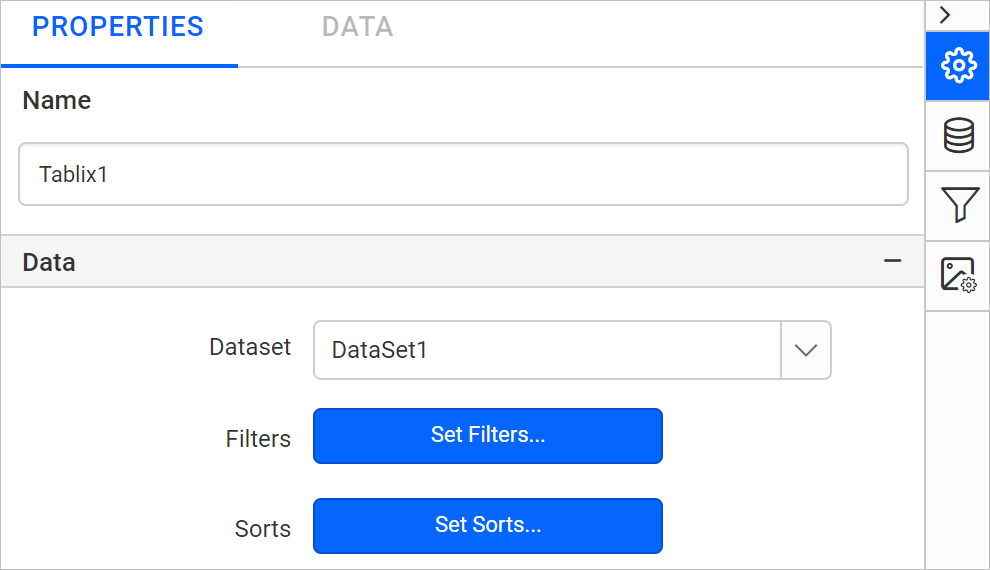
Assign the dataset to the Dataset property of the table.
Add column header
- Select the first cell in the table, click the
Text Editoricon to open the dialog, and enterProductIDas the column header text. - To set the column header text as
ProductID, follow the steps outlined in the Set header text using data assign menu section.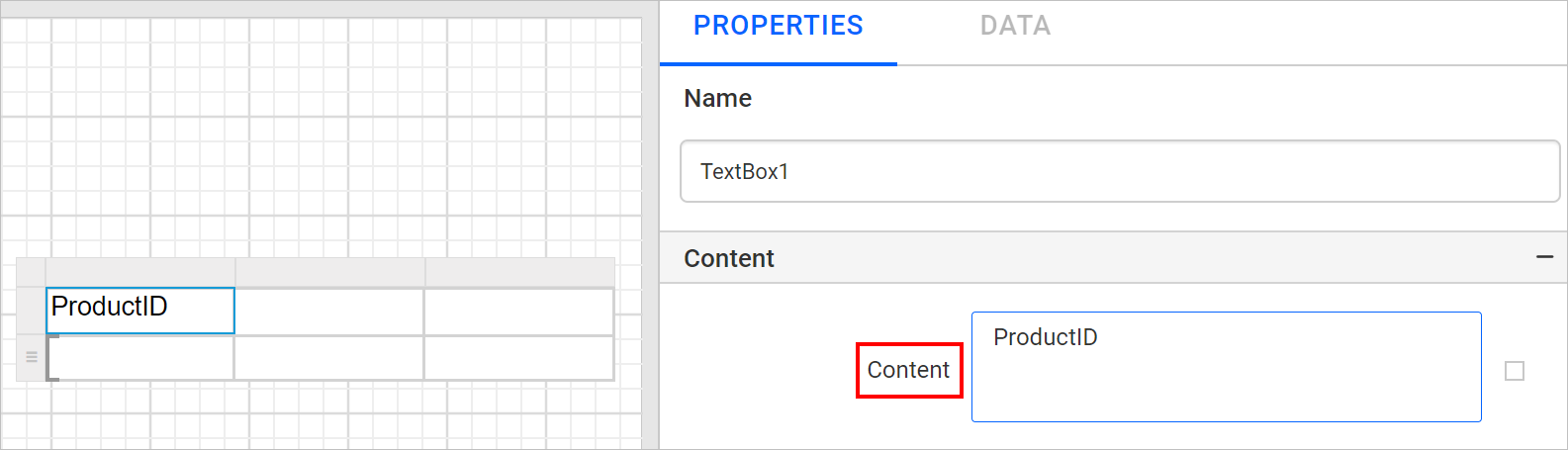
- Similarly, you can add required column header text to other cells in the table.
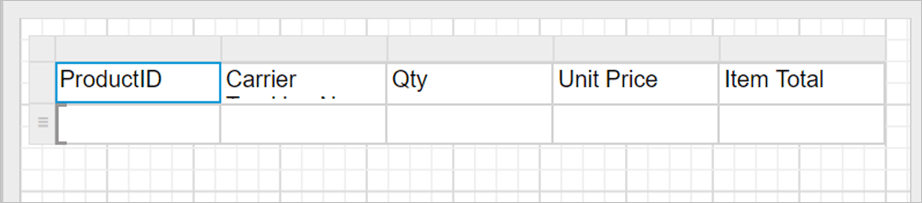
Assign data fields in table cell
- Select the table cell and click on the
Data assignmenu icon to open data assign menu.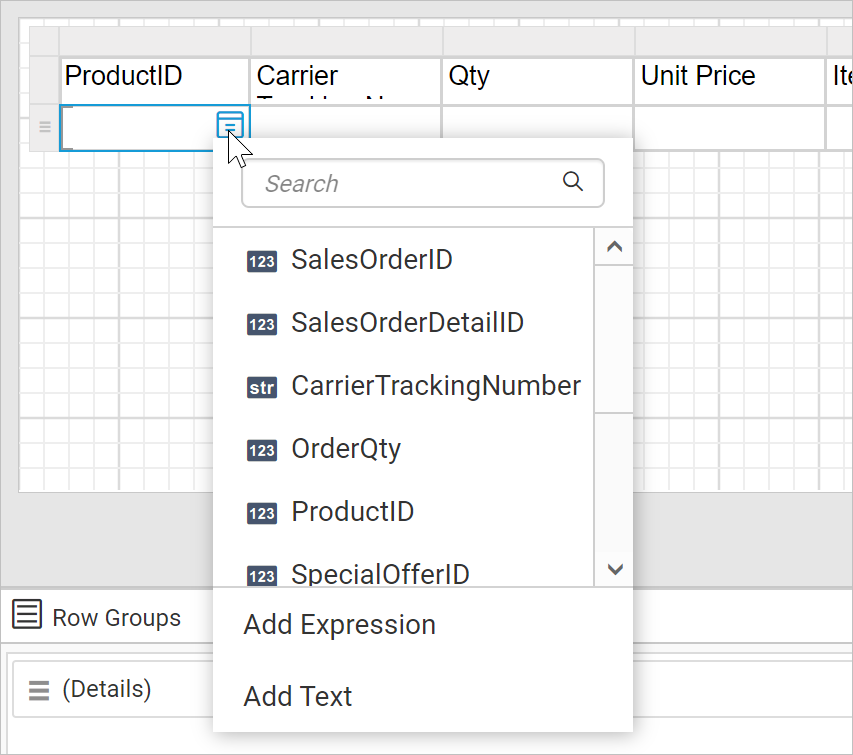
- Assign the
ProductIDfield in the table cell.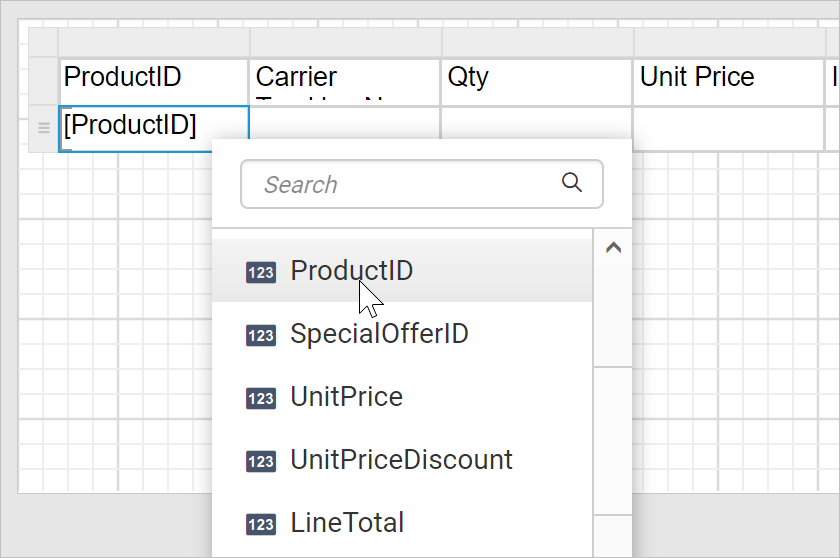
- Similarly, you can assign the required data fields to the table cell.
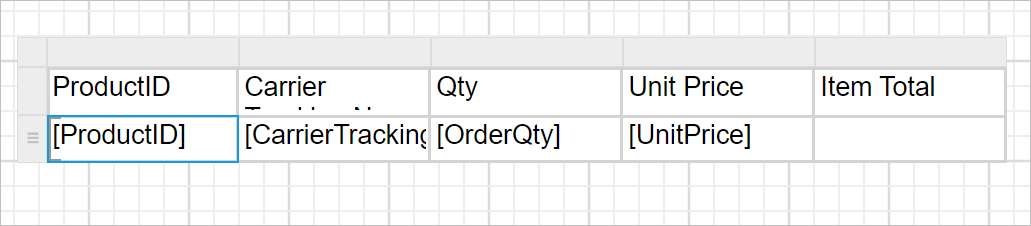
- To add the
=Fields!OrderQty.Value*Round(Fields!UnitPrice.Value,2)expression into a selected Tablix cell, follow the steps outlined in the Set expression using data assign menu section. - The table now shows the expression column.

Resize the column
To make the report easier to read, you can resize the table row height and column width.
- Place the mouse pointer on the respective column border.
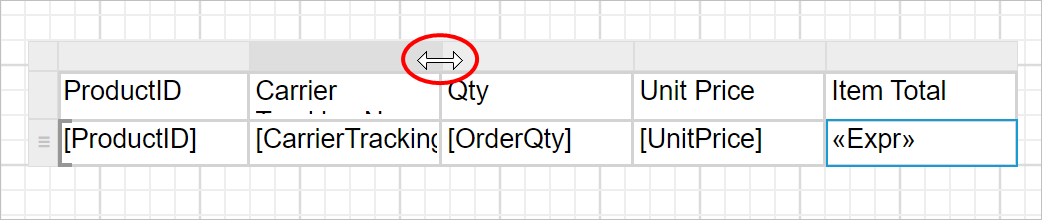
- Drag the column gripper horizontally to adjust the column width.

Resize the row
- Place the mouse pointer on the respective row border.

- Drag the row gripper vertically to adjust the row height.

Customize the appearance
Open the PROPERTIES pane. This pane holds some general settings and some specific to the report item. Configure the desired settings on the table for better report design and to improve report readability.

Add total
-
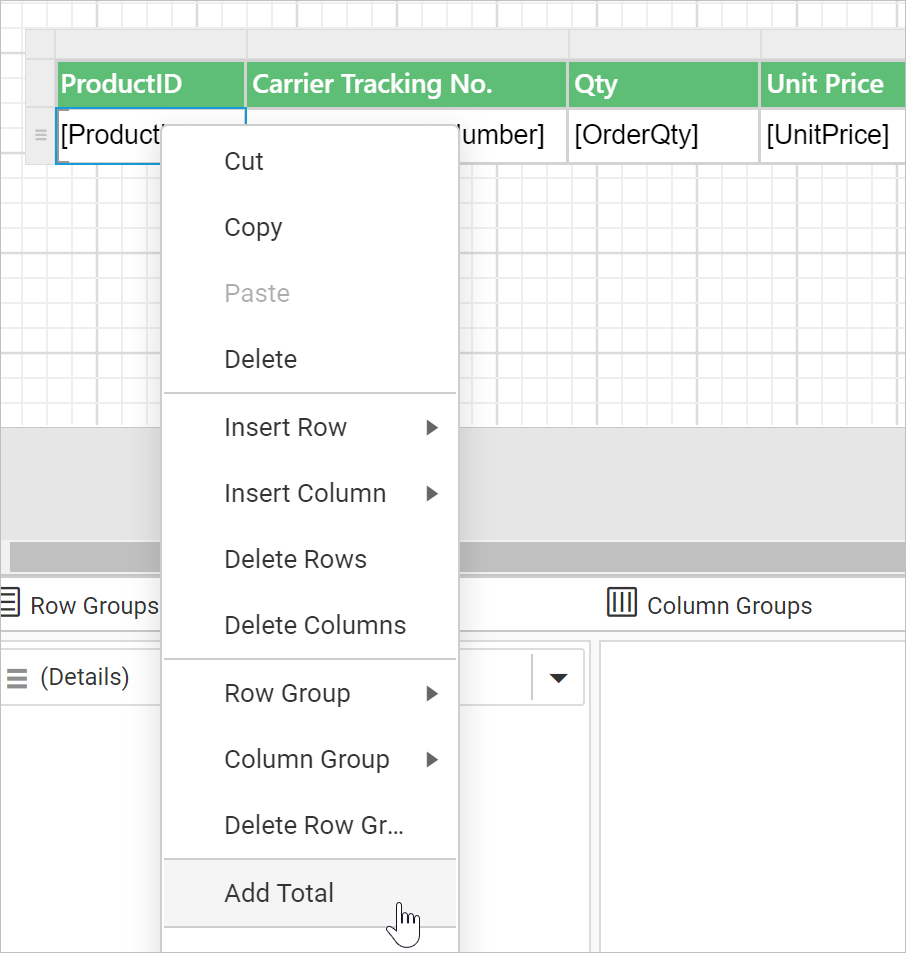
Select the second row, first cell and Right click -> Add Total
-
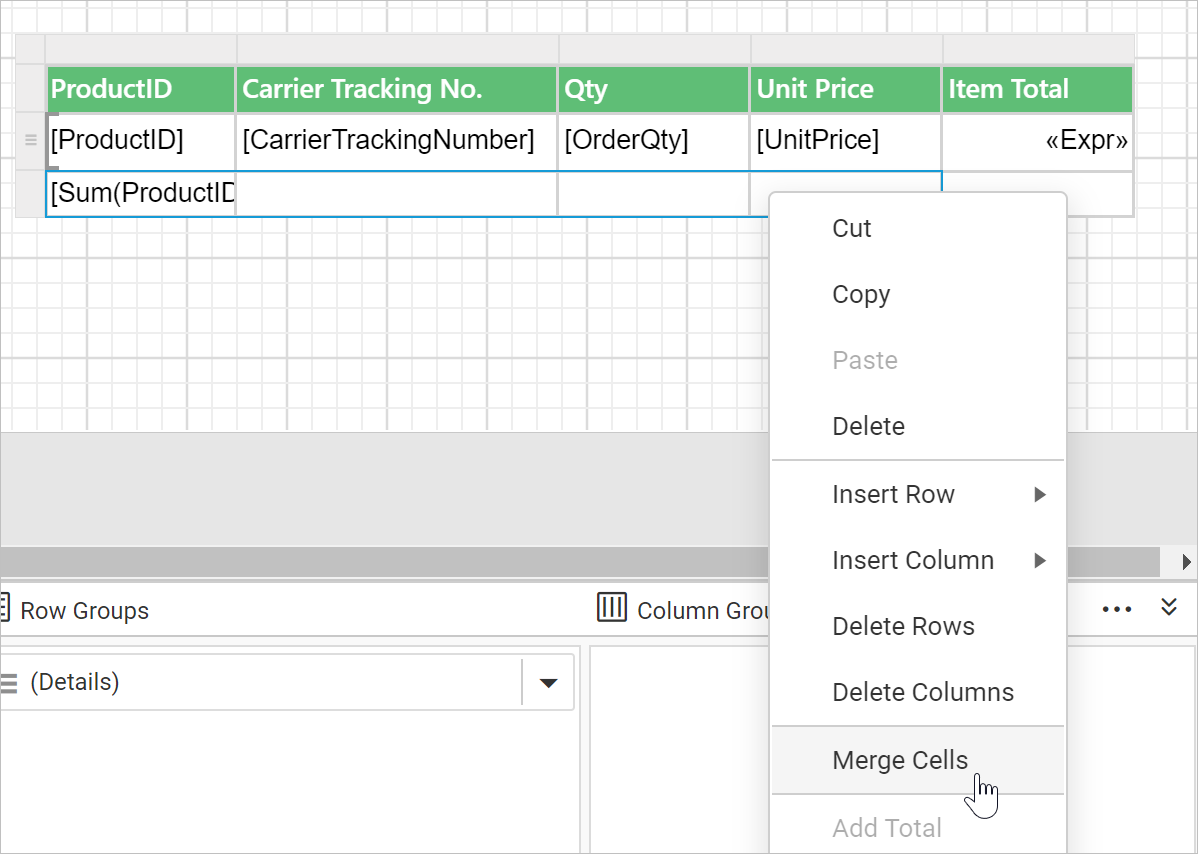
Now, select the third row, first four columns and Right click -> Merge cells
-
Modify the cell content to
Totalusing theMulti-Text Run Editordialog, and align the content toRightside.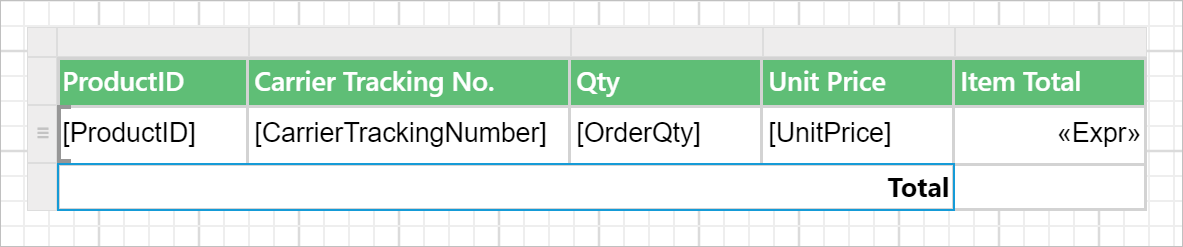
-
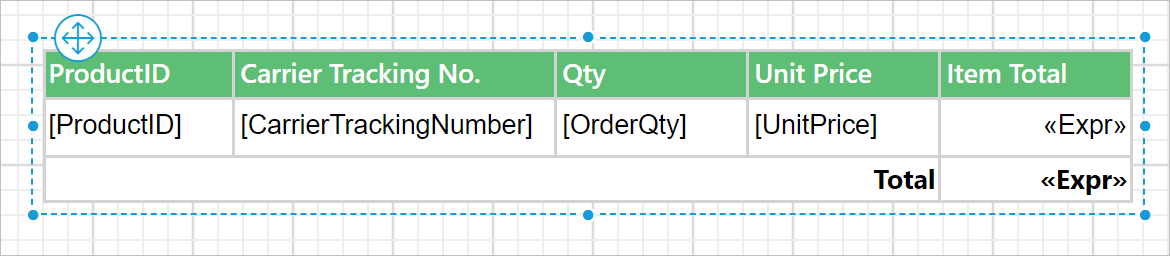
Select the last cell in the third row, and to add the expression
=Sum(Fields!OrderQty.Value*Round(Fields!UnitPrice.Value,2)), follow the steps outlined in the Set expression using data assign menu section.
The finished table design:
How do I save the RDL report?
Once you are done with the report design to save a report, refer to the How to save report section.
How do I preview the RDL report?
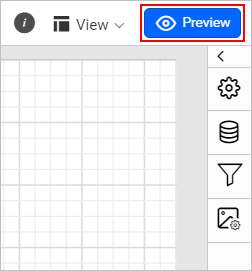
- To see the report preview, click on the Preview button in the tools pane.
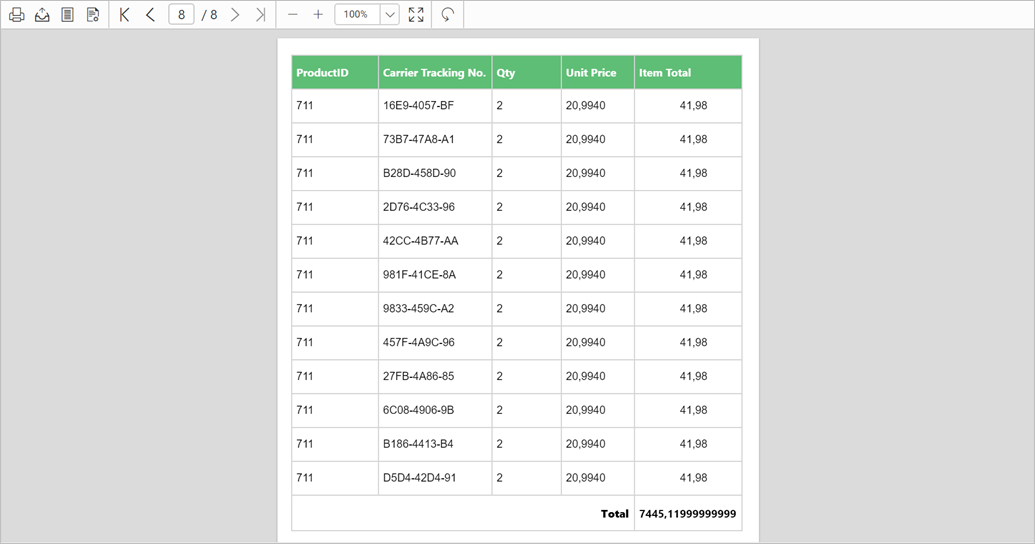
- The report preview opens.
Download the sample RDL report design from GitHub.