FileSystem:
This data source can easily stream files from the local filesystem using the reader source.
The Reader source supports three types of file extension:
- Csv files
- Excel files
- Json files
- yaml files
Example Configuration
version: 1
encrypt_credentials: false
plugins:
  extractors:
    - name: FileSystem
      connectorname: FileSystem
      config:
      properties:
        type: <csv/excel/jsonl>
        filepath: <Paste the copied file path>
        # sheetname is required for excel type
        sheetname:
Configure the Data Hub to connect FileSystem/csv/excel/json/yaml Files
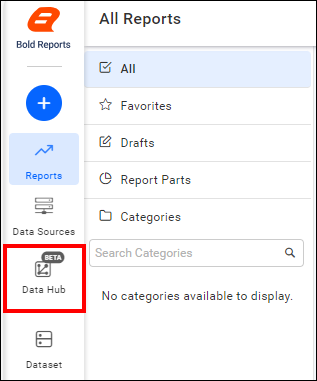
- To start, Click the
Bold Data Hubicon on the Navigation Pane.
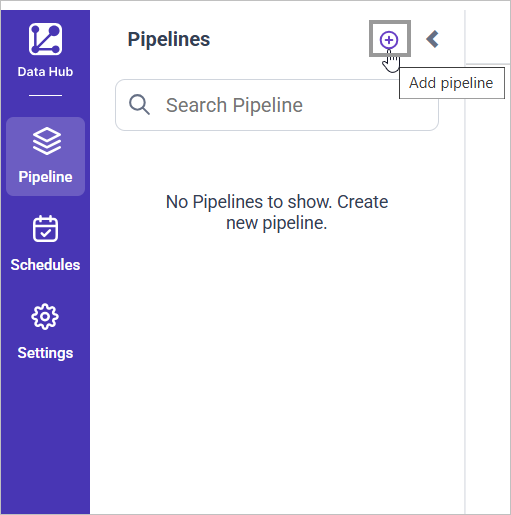
- Click
Add Pipelineand provide the name for the new pipeline.
- Select the newly created pipeline and choose the Filesystem / CSV / Excel / JSON / YAML connector. Double click or Click on Add Template option to add template.
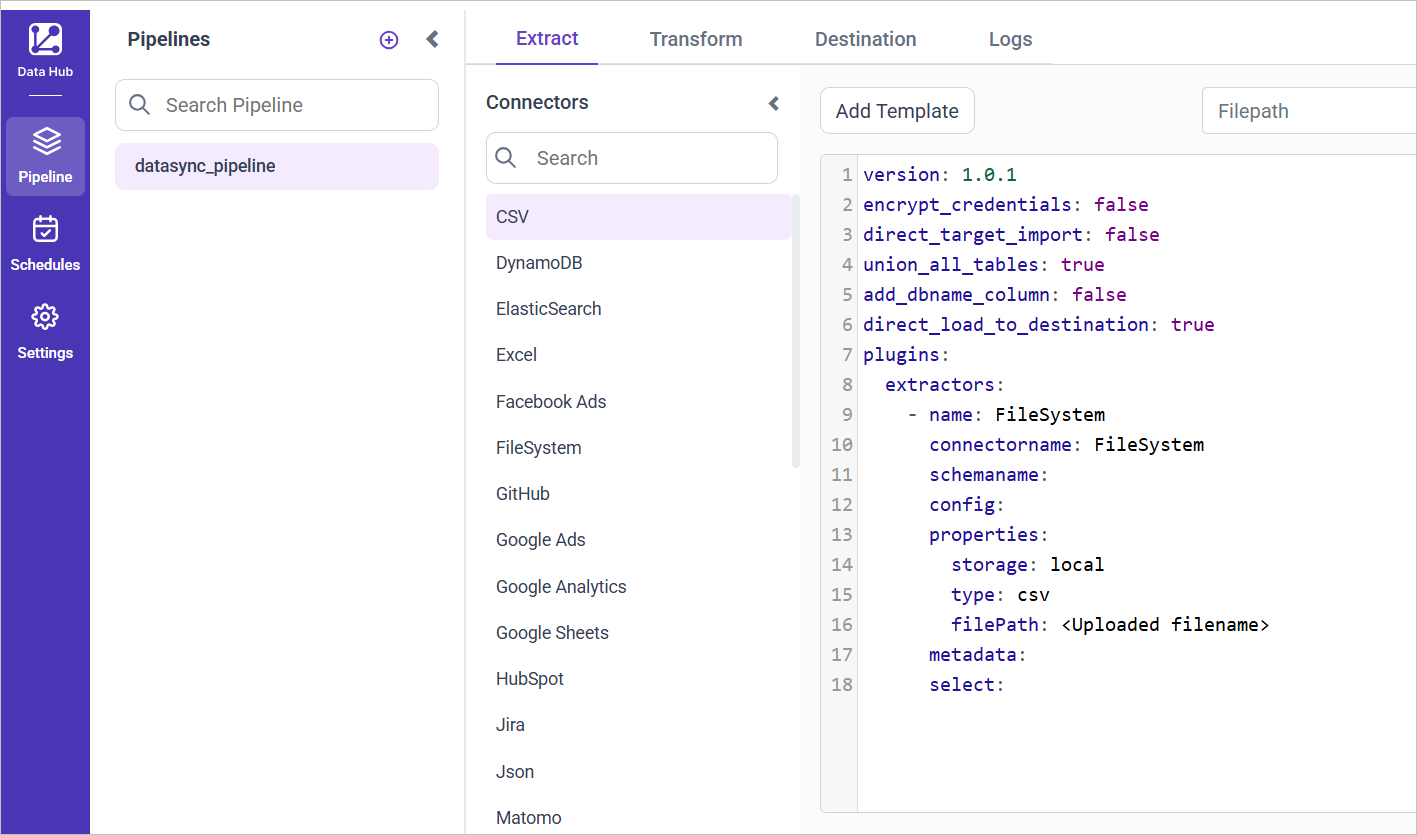
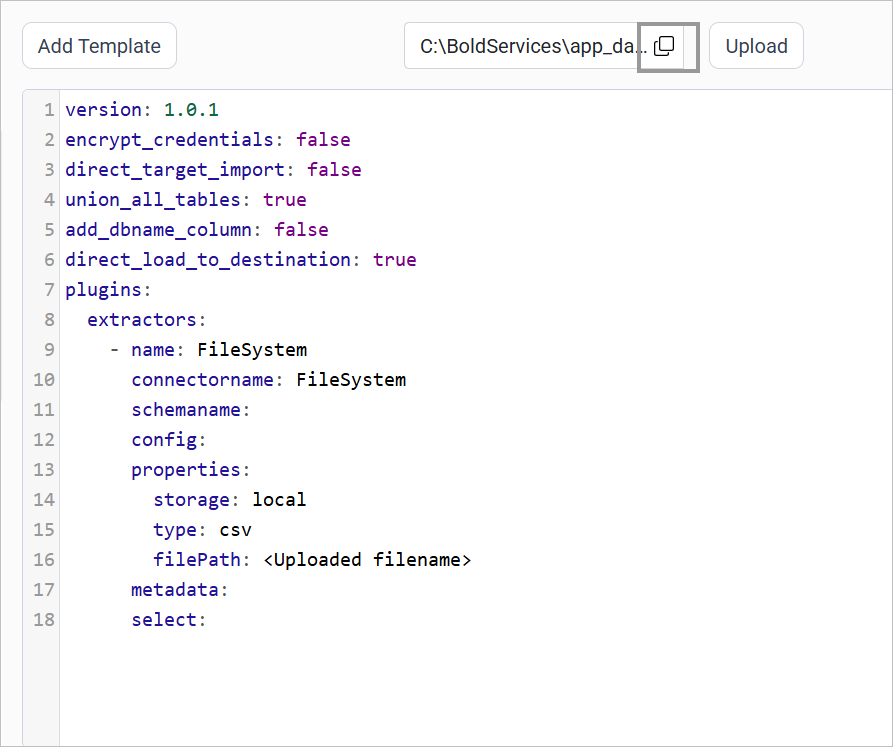
- Click the “Upload File” button to upload your Excel or CSV file

- Copy the filepath and replace in filePath property. If it’s an Excel file, add the sheet name, otherwise remove it, if using Filesystem connector.
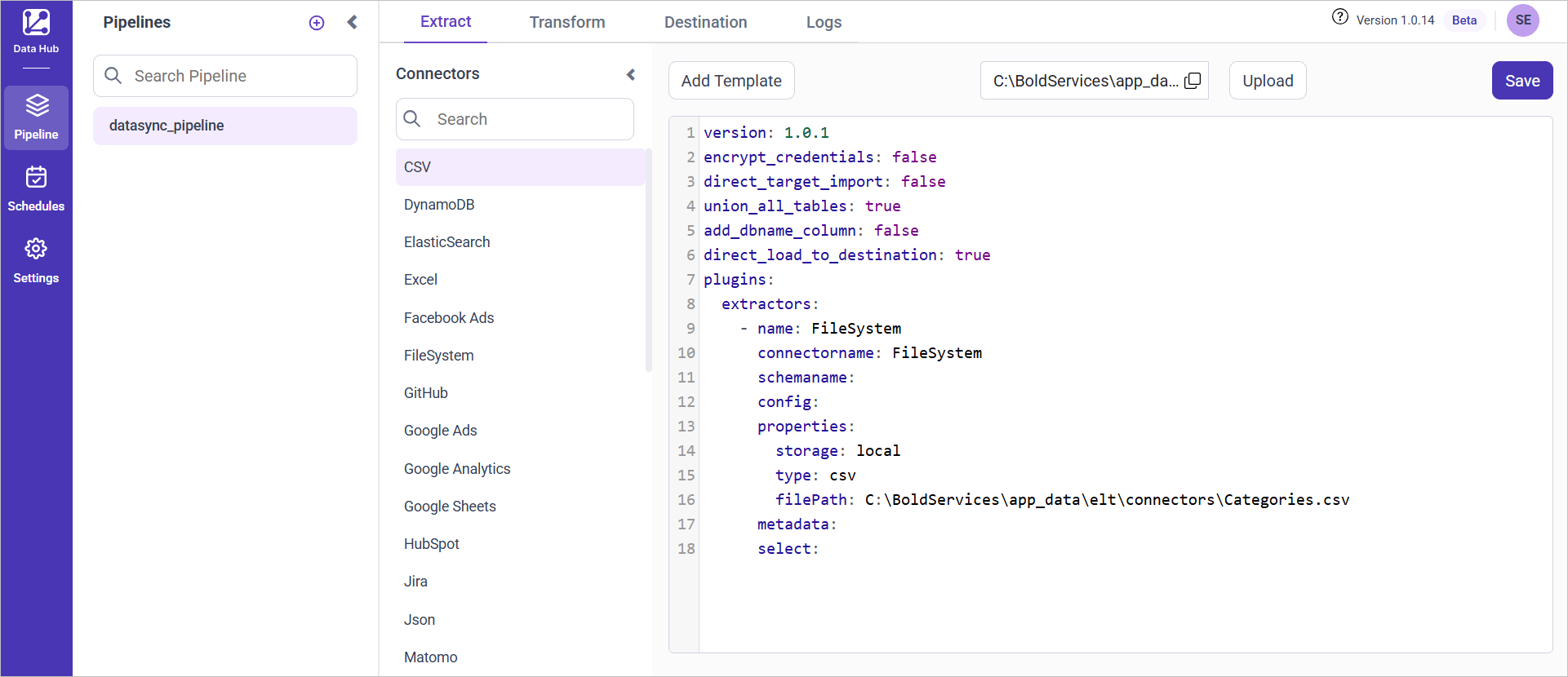
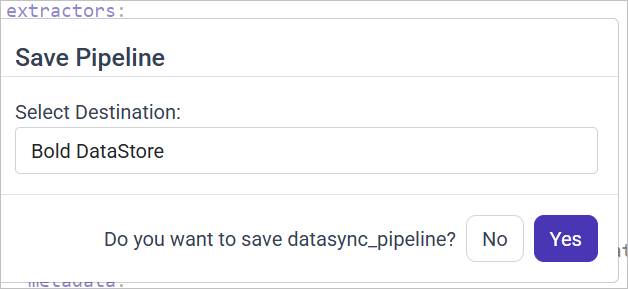
- Click Save and choose the desired destination to save the pipeline.
- Now the pipeline will be saved and started automatically. Click on Logs to see if the run is completed and data source is created in Bold Reports®.
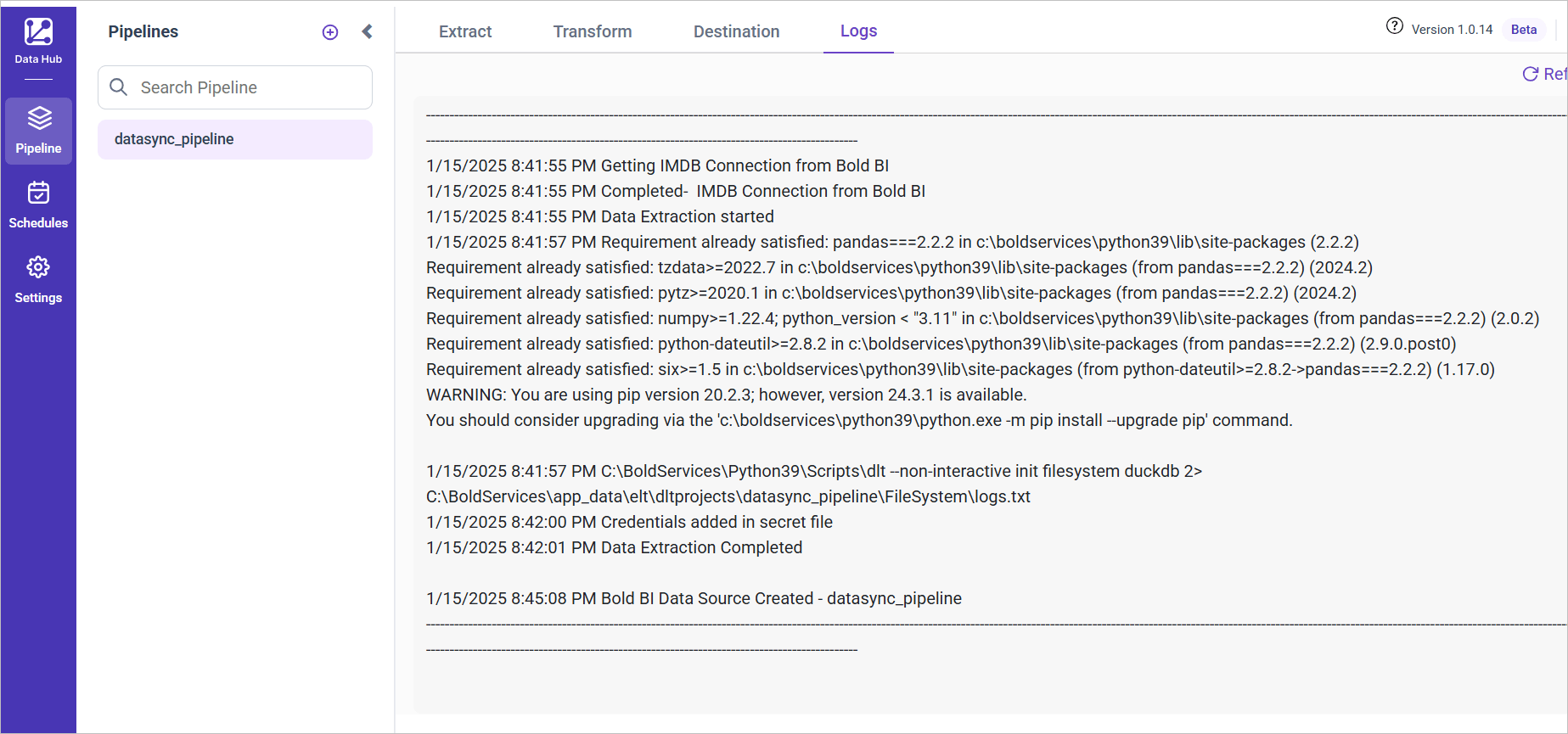
- Creating a Pipeline in Bold Data Hub automatically creates a Data Source in Bold Reports®. The Bold Reports® Data Source is a live data source to the destination database used in Bold Data Hub.

Schedule Data Hub Job
- To configure interval-based scheduling, click on the schedules tab and select the created pipeline and click on the schedule icon and configure it.


- For on-demand refresh, click
Run Nowbutton.
 .
.
- The Schedule history can be checked using the history option as well as logs.
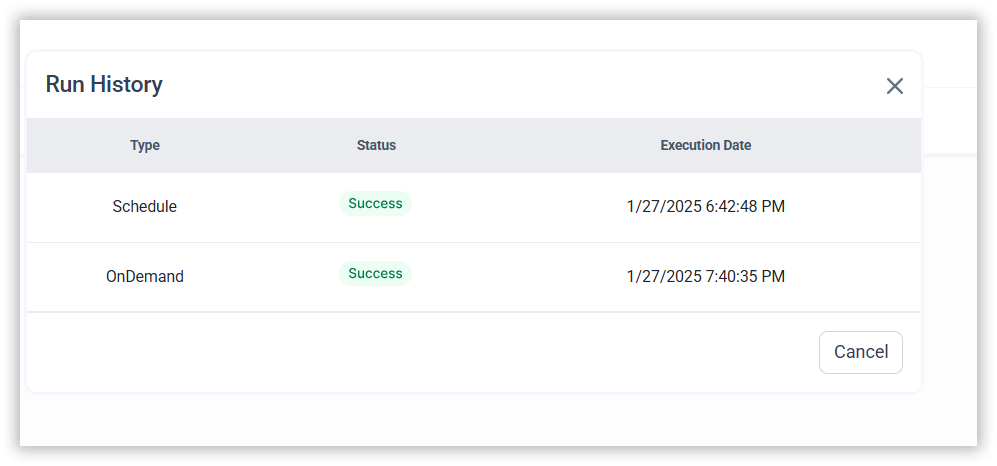
- Click on Logs to see if the run is completed and data source is created in Bold Reports®.
- Click
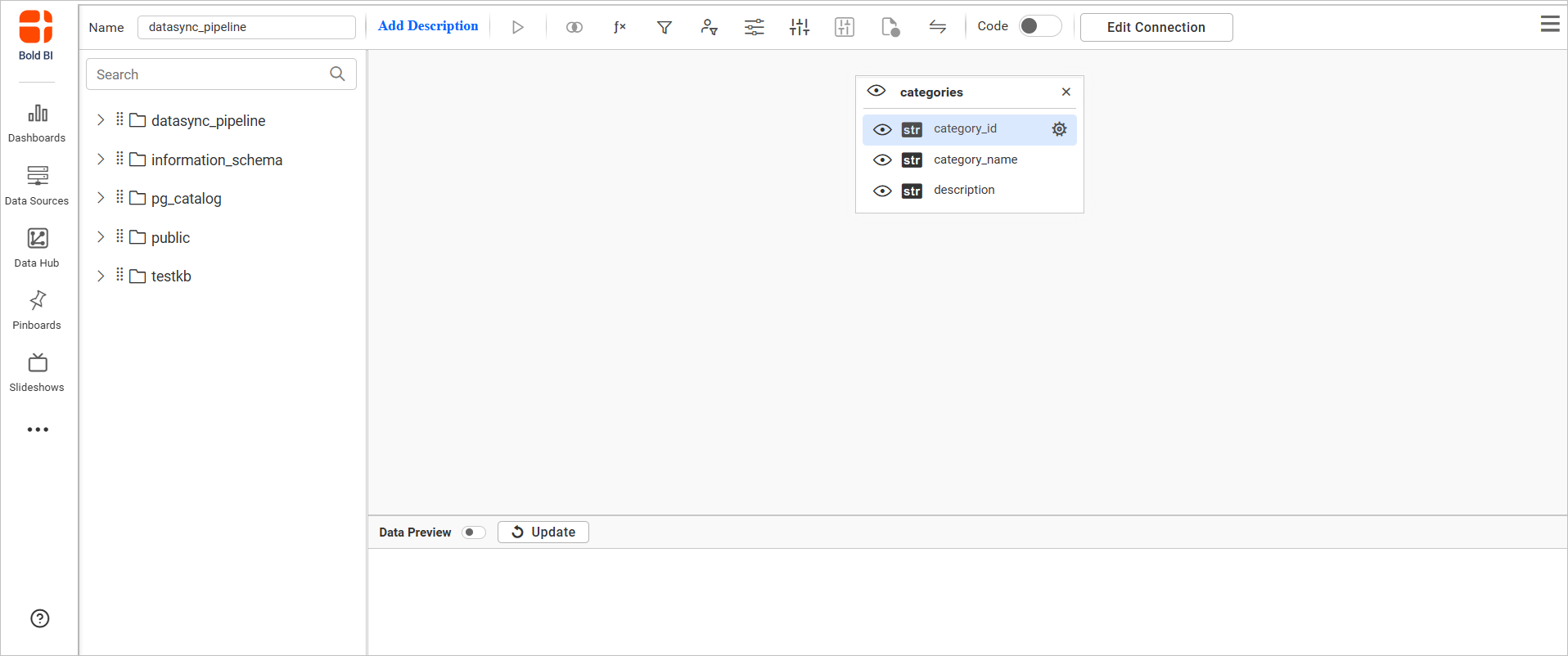
Edit DataSourceOption to view the created tables.