Connect Amazon DynamoDB with Bold Data Hub
The Bold Data Hub DynamoDB connector loads data from Amazon DynamoDB into Bold Reports®. Amazon DynamoDB is a fully managed NoSQL database service that offers fast and predictable performance at any scale. It stores data as key-value and document items and automatically handles scaling, availability, and infrastructure.
Connection Properties
The DynamoDB connector in Bold Data Hub reads the following properties from the config section of a YAML file:
 access_key_id: <your access key>
 secret_access_key: <your secret key>
 region: <region>
 column_name: <column-name>
 date: <date>
 limit: <limit>
Example Configuration
The following Bold Data Hub YAML template shows a complete DynamoDB extractor configuration:
version: 1.0.1
encrypt_credentials: false
plugins:
  extractors:
    - name: DynamoDB
      connectorname: DynamoDB
      schemaname:
      config:
        access_key_id: YOUR_ACCESS_KEY
        secret_access_key: YOUR_SECRET_KEY
        region: <aws-Region>
        column_name: ''
        date: ''
        limit: 10
      properties:
      metadata:
      select:
      - tablename
How do I connect DynamoDB in Bold Data Hub?
You connect Amazon DynamoDB by creating a pipeline in Bold Data Hub and adding the DynamoDB template to it.
-
Click the
Data Hubicon on the Navigation Pane.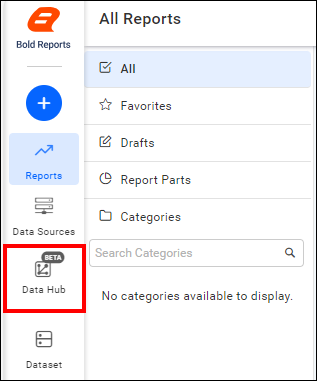
-
Click
Add Pipelineand enter a name for the new pipeline.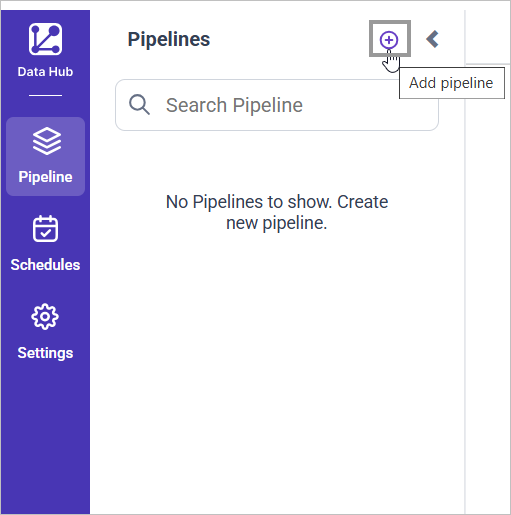
-
Select the newly created pipeline and add the
DynamoDBtemplate.
-
Update the details required in the template, using the configuration parameters below.
-
Click Save and choose the destination to save the pipeline.

Creating a pipeline in Bold Data Hub automatically creates a data source in Bold Reports®. The Bold Reports® data source is a live data source to the destination database used in Bold Data Hub.

Configuration Parameters
The DynamoDB template in Bold Data Hub uses these parameters:
| Parameters | Description |
|---|---|
| Access Key ID: | Provide your AWS Access Key ID used to authenticate the DynamoDB connection. |
| Secret Access Key: | Provide your AWS Secret Access Key associated with the above access key. |
| Region: | Enter the AWS region where your DynamoDB table is hosted. Example: ap-south-1. |
| Column Name: | Attribute name used for date-based filtering. Activated only when both column_name and date are provided. Example: column_name: created_at |
| Date: | The date value used for filtering. Date-based filtering occurs only when paired with a non-empty column_name. Example: date: 2025-06-10 |
| Limit: | Maximum number of items returned per DynamoDB scan request. Used when no date or column filters are provided. Enables limited scans with pagination. |
| Select: | Tablename(s): Specify the table name to load data. |
How do I schedule the DynamoDB pipeline?
You schedule the DynamoDB pipeline in Bold Data Hub from the schedules tab, or you run it on demand.
-
To configure interval-based scheduling, click the schedules tab, select the created pipeline, click the schedule icon, and configure the schedule.


-
For an on-demand refresh, click the
Run Nowbutton.
-
Check the schedule history with the history option and the logs.
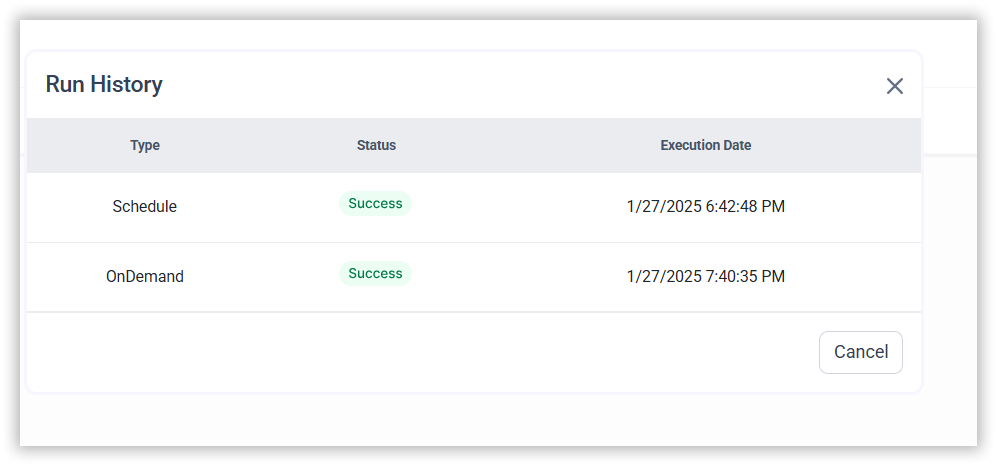
-
Click Logs to see whether the run is completed and the data source is created in Bold Reports®.
-
Click the
Edit DataSourceoption to view the created tables.
Frequently asked questions
When does the DynamoDB connector filter by date?
The Bold Data Hub DynamoDB connector filters by date only when both column_name and date are provided.
What does the limit property do?
The limit property sets the maximum number of items returned per DynamoDB scan request. It is used when no date or column filters are provided, and enables limited scans with pagination.